
Leading Chest Pain Treatment Center After Car Accidents in Beaumont TX
Chest pain after a car accident is not a symptom to wait out. The seat belt, steering wheel, and the rapid deceleration of a crash can injure the heart, lungs, aorta, sternum, and ribs — and some of those injuries can be life-threatening even when the pain feels manageable. If you have new or worsening chest pain after a collision, call 911 or go to the nearest emergency department first. Once you are stabilized, the team at Car Accident Cares can take over follow-up imaging, documentation, and rehab for non-emergent injuries such as sternal contusion, rib strain, and costochondritis.
Medically reviewed by Deepak Sharma, DC · Last reviewed · Updated
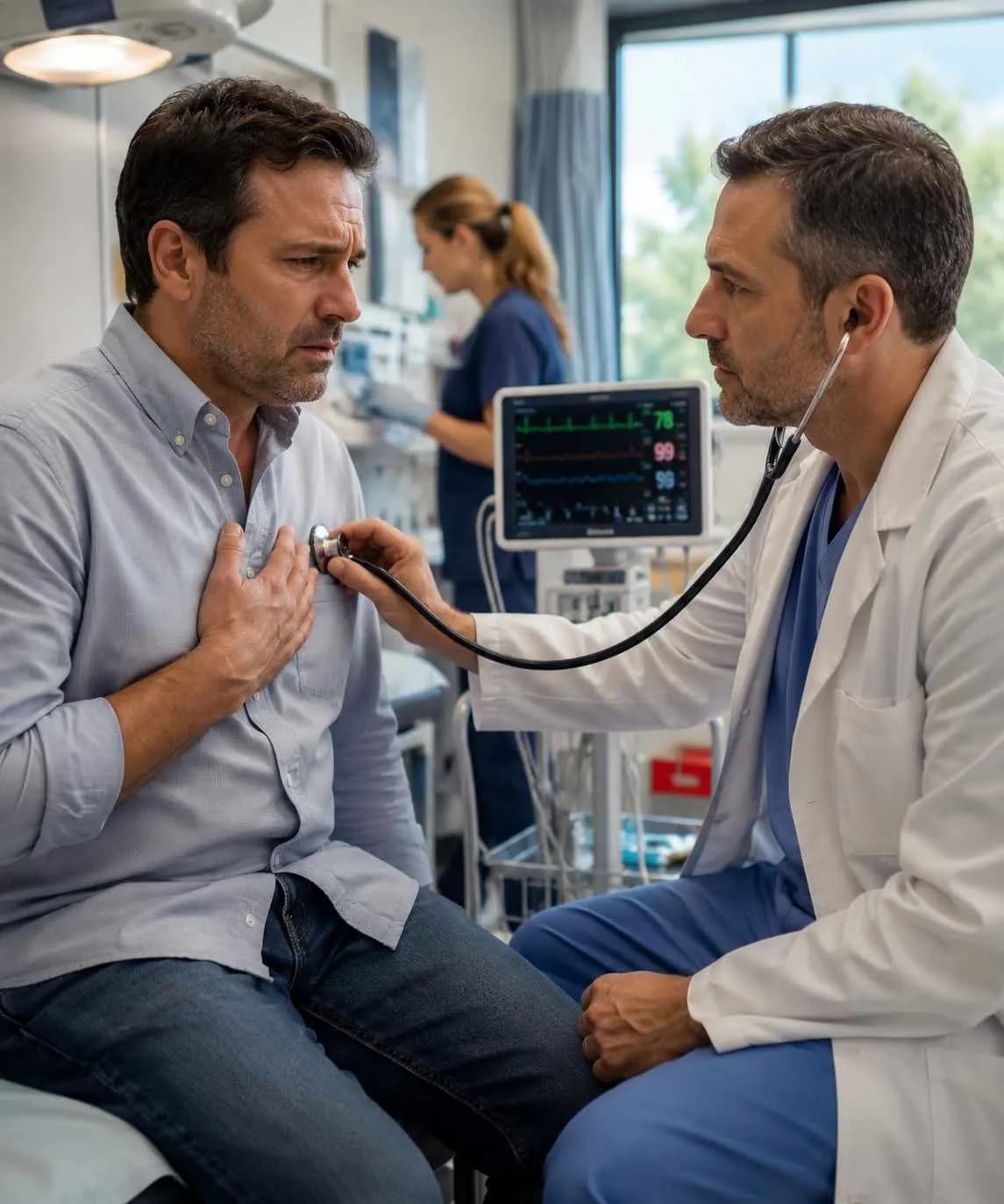
Quick answer · Key facts
- New or worsening chest pain after a crash is a medical emergency until proven otherwise — call 911 or go to the nearest ER.
- Serious post-MVA causes include cardiac contusion, aortic injury, pneumothorax, sternal or rib fracture, and internal bleeding.
- Common non-emergent causes include seat-belt-sign bruising, sternal contusion, rib strain, and costochondritis.
- Initial workup commonly includes vital signs, ECG, chest X-ray or CT, and bloodwork such as troponins when a cardiac cause is suspected.
- Follow-up imaging and rehab are appropriate once life-threatening causes are ruled out by an emergency provider.
- Medically reviewed by Deepak Sharma, DC.
Chest pain after a crash? Call 911 or go to the ER now.
Chest pain after a motor-vehicle collision can signal injury to the heart, lungs, aorta, or chest wall — including injuries that are not visible from the outside and that progress quickly. The American College of Emergency Physicians (ACEP) consistently urges immediate evaluation for traumatic chest pain. Do not drive yourself if you are short of breath, lightheaded, or in severe pain.
When is post-accident chest pain an emergency?
Any of the following findings — alone or in combination — after a crash should be evaluated emergently. They can indicate cardiac contusion, aortic injury, pneumothorax, hemothorax, internal bleeding, or significant fracture.
- Severe, crushing, or worsening chest pain, or pain radiating to the jaw, neck, back, or arm
- Shortness of breath, gasping, or pain that worsens sharply with breathing
- Coughing up blood, or a sudden bluish color to the lips or fingertips
- Rapid, slow, or irregular heartbeat; palpitations; or feeling like you might pass out
- Lightheadedness, fainting, confusion, cold or clammy skin, or pale appearance
- A visible seat-belt bruise across the chest combined with pain, tenderness, or shortness of breath
- Severe pain over the sternum or ribs, especially with deformity, crunching sensations, or audible clicks
- Any blood pressure drop, persistent vomiting, or rapidly expanding swelling or bruising
Even if your chest pain feels mild, certain mechanisms — high-speed collisions, frontal or T-bone impacts, airbag deployment, and direct steering-wheel or seat-belt loading — raise the index of suspicion for internal injury. When in doubt, be seen in an emergency department. Imaging and bloodwork that can rule out the dangerous causes are most useful in the first hours.
What causes chest pain after a car accident?
Cardiac contusion
Bruising of the heart muscle from blunt impact; can cause arrhythmia and requires ECG and observation.
Aortic injury
A rare but life-threatening tear of the aorta seen with high-energy deceleration — needs urgent CT angiography.
Pneumothorax / hemothorax
Air or blood in the chest cavity from rib injury or lung tear; causes shortness of breath and is diagnosed on imaging.
Sternal or rib fractures
Common with seat-belt or steering-wheel impact; painful with breathing and can complicate lung function.
Internal bleeding
Liver, spleen, or vascular injury can present as chest, upper-abdominal, or shoulder-tip pain.
Musculoskeletal chest-wall injury
Seat-belt contusion, rib strain, intercostal muscle injury, and costochondritis — the most common non-emergent causes.
What does evaluation and follow-up care look like?
Care unfolds in two phases — emergent rule-out, then outpatient follow-up. At Car Accident Cares, our role typically begins after the ER has ruled out life-threatening injury, with imaging review, pain management, and rehab.
- 1
Emergency evaluation
Vital signs, ECG, focused exam, chest X-ray or CT, and bloodwork such as troponins if a cardiac cause is suspected. Performed in an ER, not in an outpatient clinic. - 2
Imaging review and second opinion
Once stable, we review ER imaging and reports, request additional studies if symptoms persist, and explain findings in plain language. - 3
Targeted pain management
For chest-wall injuries, breathing exercises, modified activity, and short-term pain control help prevent complications such as pneumonia from shallow breathing. - 4
Rehabilitation and gradual return
Physical therapy and graded activity for rib, sternal, and intercostal injuries, with attention to posture and breathing mechanics. - 5
Documentation and coordination
Clear, dated records from emergency care through recovery, coordinated with your primary doctor, insurer, and attorney as you direct.
Follow-up care, insurance & attorney liens in Beaumont
Emergency care is billed by the hospital that provides it. For follow-up imaging review, pain management, and rehab through Car Accident Cares, we coordinate with health insurers and with personal-injury attorneys, and we explain your expected out-of-pocket costs before care begins.
If you do not have insurance or are waiting on a settlement, ask about lien-friendly arrangements for follow-up care, so recovery is not delayed by billing.
Why timing matters for both safety and your claim
Some post-crash chest injuries evolve over hours — bleeding can expand, a small pneumothorax can grow, and arrhythmias from cardiac contusion may appear later. Prompt emergency evaluation is the only way to catch these in time.
From a documentation standpoint, an ER visit on the day of the crash anchors your records to the accident. A long gap between the collision and your first chest-pain evaluation can be used by insurers to question the cause of your injury.
Why choose Car Accident Cares for post-ER follow-up
We do not replace the emergency department — we coordinate the care that comes after it.
ER-first guidance, every time
Imaging review by accident-focused providers
Pain management without rushing to opioids
Coordinated multidisciplinary team
Lien-friendly follow-up
Documentation that supports your case
Hear From Our Satisfied Clients
“I almost didn't go to the ER because the pain wasn't that bad. They found a small pneumothorax I never would have caught at home. The follow-up team here walked me through every imaging report after.”
“The ER ruled out anything serious, but I still hurt for weeks from the seat belt. Car Accident Cares set up physical therapy and pain management and coordinated everything with my attorney.”
Services we use to treat this injury
Chiropractor Care in Beaumont
Spinal alignment, soft-tissue manipulation, and adjustment therapies to relieve back and neck pain after a collision.
Learn moreMD Consultation in Beaumont
Initial medical evaluation by a licensed primary-care MD to document injuries and coordinate downstream care.
Learn moreBest Affordable Beaumont MRI Diagnostic Imaging Service
High-field MRI for soft-tissue, disc, and ligament injuries — same-week appointments and transparent pricing.
Learn morePain Management Consultants in Beaumont
Non-surgical interventional pain specialists — trigger-point, epidural, facet joint, and medication management.
Learn moreOther injuries patients often have together
Whiplash & Neck Pain Treatment
The #1 injury seen after rear-end collisions — even at low speeds.
See protocolHerniated Disc Doctor
Sciatica, radiating pain, and weakness from disc injuries.
See protocolLower Back & Knee Pain Treatment
Lumbar strain, ligament damage, and post-collision joint pain.
See protocolShoulder Injuries
Rotator cuff, labral tears, and seatbelt-related shoulder trauma.
See protocolFrequently Asked Questions About Chest Pain
Don't see your question? Call us at (409) 834-4100 — we answer 24/7.
I have chest pain after my accident — should I go to the ER?
Yes. Chest pain after a car accident should be evaluated emergently. Several life-threatening injuries — cardiac contusion, aortic injury, pneumothorax, internal bleeding — can present with chest pain that initially feels manageable. Call 911 or go to the nearest emergency department.What if my chest pain is mild and started later in the day?
Delayed-onset chest pain still warrants evaluation. Some injuries evolve over hours, and seat-belt-sign bruising, rib injuries, or sternal contusion can become more painful as inflammation develops. If symptoms persist, worsen, or are accompanied by any red-flag finding, seek emergency care.What is a seat-belt sign and is it dangerous?
A seat-belt sign is the bruise pattern left by the belt across the chest or abdomen during a crash. It indicates significant force was transferred to the body, and it raises concern for underlying chest-wall, lung, or abdominal injury. Seat-belt-sign bruising should be evaluated emergently.What tests are done to check for serious chest injury?
Typical emergency evaluation includes vital-sign monitoring, an ECG, a chest X-ray or CT, and bloodwork such as troponins when a cardiac cause is suspected. Additional studies — CT angiography for suspected aortic injury, ultrasound for cardiac function — are added based on findings.Could chest pain after a crash be from costochondritis or a rib strain?
Yes — and these are common non-emergent causes. However, they are a diagnosis of exclusion after dangerous causes have been ruled out. Only after an emergency evaluation has cleared cardiac, lung, and vascular injury should chest-wall pain be managed in an outpatient setting.What should I do if I already left the scene and now have chest pain?
Go to the nearest emergency department or call 911. Do not drive yourself if you are short of breath, lightheaded, or have severe pain. Tell the team that the pain followed a recent motor-vehicle collision and describe how the crash occurred.How is a cardiac contusion treated?
Cardiac contusion is bruising of the heart muscle from blunt impact. Care depends on severity and may involve ECG monitoring, observation, and management of any arrhythmias. It is diagnosed and managed by emergency or cardiology providers, not in an outpatient clinic.Can you treat my chest injury at Car Accident Cares?
For non-emergent, post-ER follow-up — imaging review, pain management for chest-wall injuries, rehab for rib and sternal injuries — yes. We do not provide emergency cardiac, vascular, or trauma care. If your symptoms suggest those, we will route you to the ER first.Will follow-up care be covered by insurance or an attorney lien?
We coordinate with health insurers and with personal-injury attorneys for follow-up care. Lien-friendly arrangements are available if you do not have insurance or are waiting on a settlement, so recovery is not delayed by billing.How long does chest-wall pain take to heal after a crash?
Most musculoskeletal chest-wall injuries — bruising, strains, costochondritis — improve over several weeks. Rib fractures can take six weeks or more to heal. Persistent or escalating pain, or any new red-flag symptom, should prompt re-evaluation.
Deepak Sharma, DC is a licensed Doctor of Chiropractic and the owner of Car Accident Cares in Beaumont, TX. He reviews the clinical content published across the site and works with a multidisciplinary network of MDs, chiropractors, imaging centers, and pain-management specialists focused on accurate diagnosis, evidence-based treatment, and complete recovery for motor-vehicle-accident victims across Beaumont and Houston.
Explore Blog
What to Expect from Your Whiplash Recovery Timeline Texas After a Car Accident
Most whiplash patients recover within 6 to 12 weeks with appropriate care — but that window is not guaranteed, and for Beaumont drivers dealing with delayed sy…
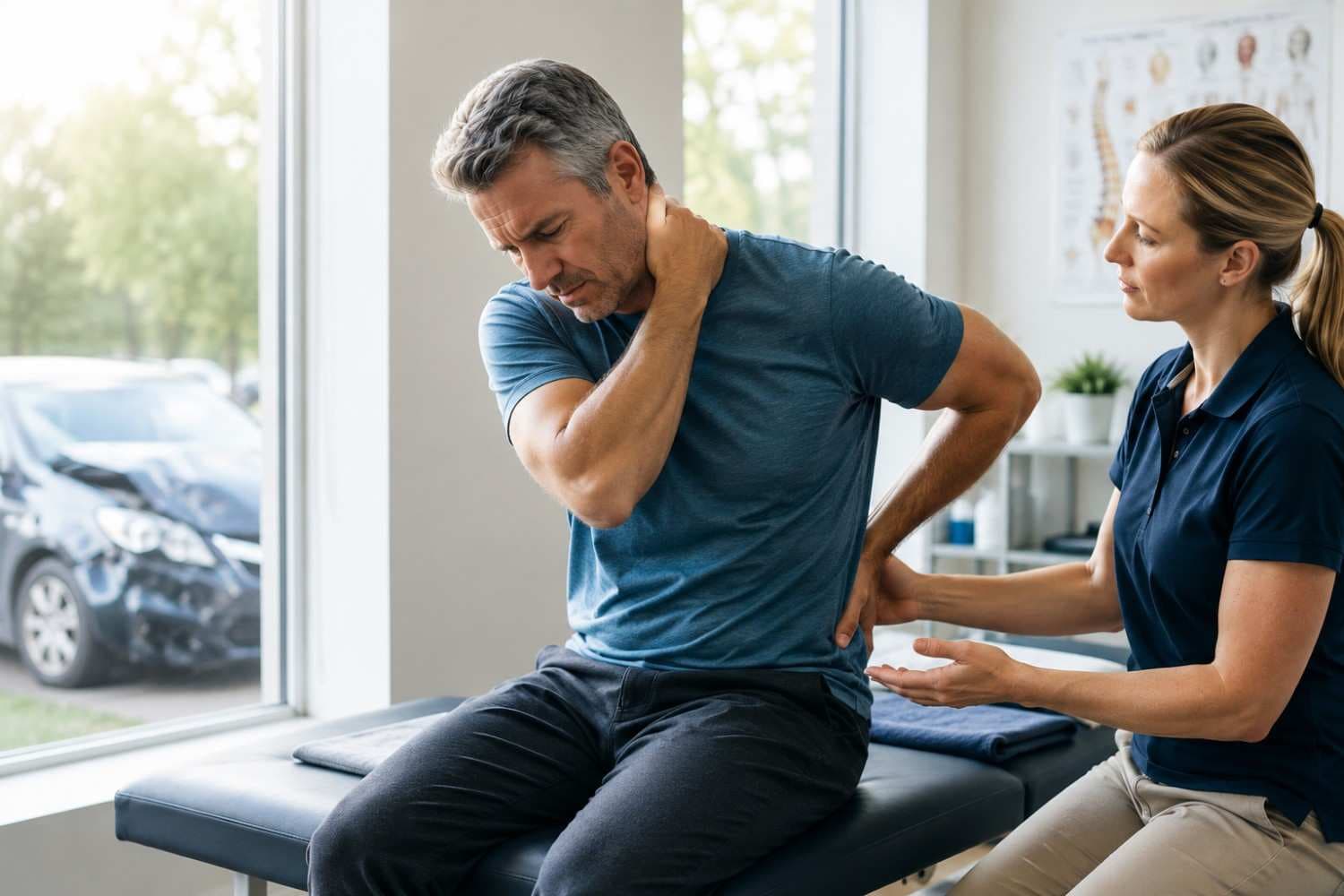
Can a Car Accident Aggravate a Pre-Existing Condition in Texas?
If you have been involved in a motor vehicle collision in Southeast Texas, you likely have countless questions running through your mind. Assessing vehicle dam…
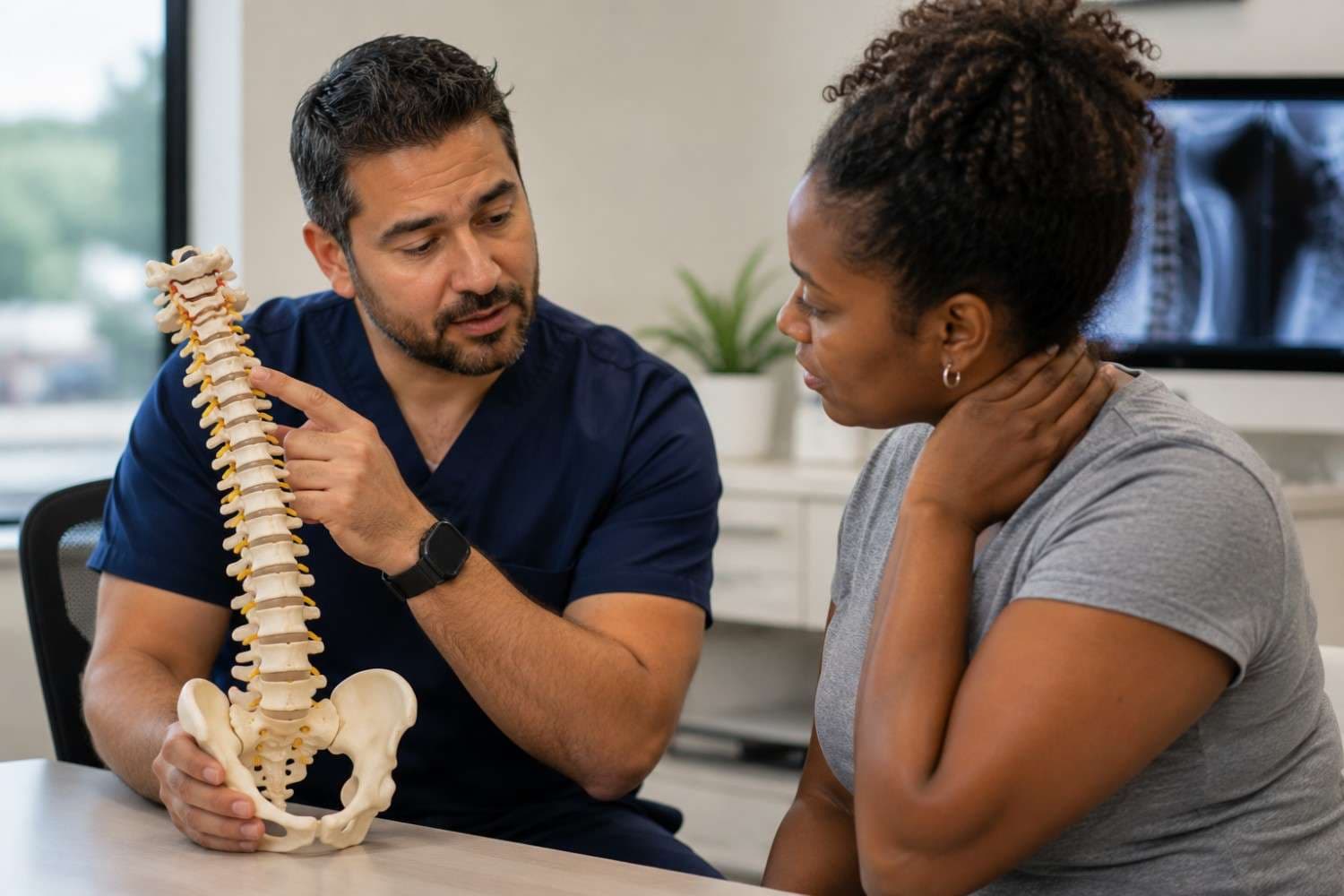
Understanding Different Types of Car Accident Impacts and Injuries
Driving through busy Beaumont TX—especially near intersections on Dowlen Road, along Interstate 10, or through the heavy traffic on College Street—means dealin…
Find Auto Injury Specialist Near You
Same-week appointments. Lien-friendly billing. Over 100 clinic locations across Beaumont and Houston.