
Understanding Pain Injections: What You Need to Know in Beaumont, TX
DS
By Deepak Sharma, DC
Medically reviewed
Owner & Doctor of Chiropractic · 6 min read · Published · Updated · Last reviewed

Introduction
Chronic pain affects 20–30% of adults nationwide. For many Beaumont residents, when oral medications, physical therapy, and chiropractic care no longer suffice, pain injections Beaumont TX provide a powerful alternative. These advanced procedures deliver medication directly to the source of discomfort, maximizing relief while minimizing systemic adverse effects. This guide demystifies pain injections—covering their purpose, types, conditions treated, imaging guidance, and what to expect—empowering you to make informed decisions about your pain management. Our goal is to empower Beaumont residents with the knowledge to make informed decisions about their pain management journey, leveraging comprehensive pain management solutions.

What Are Pain Injections?
Pain injections are interventional procedures that deliver medication—typically corticosteroids and local anesthetics—directly to the area of inflammation or nerve irritation. Unlike oral drugs that circulate systemically, injections target the pain generator, reducing inflammation and numbing nerves in that specific region. These injections can be both diagnostic means confirming the pain source and therapeutic means providing sustained relief. Advanced imaging guidance—fluoroscopy, ultrasound, or CT—ensures precise needle placement, enhancing safety and efficacy interventional pain management.
Mechanism of Action
- Corticosteroids: Potent anti-inflammatory agents that reduce swelling around nerves or within joints.
- Local Anesthetics: Provide immediate but temporary numbing, allowing for early pain relief.
- Combined Effect: The anesthetic offers rapid relief, while the steroid delivers longer-lasting anti-inflammatory benefit, often lasting 3–6 months per injection.
Role of Imaging Guidance
Accurate needle placement is crucial. Real-time fluoroscopy uses X-ray to visualize needle trajectory; ultrasound provides soft-tissue imaging; CT offers cross-sectional clarity. Imaging minimizes complications—avoiding blood vessels, bowel, or nerve roots—and improves outcomes by ensuring medication reaches the targeted site.
Types of Pain Injections
Our pain injections Beaumont TX specialists offer a comprehensive range of injection therapies, tailored to address various chronic pain conditions. Understanding the different types of injections can help you appreciate their specific applications.
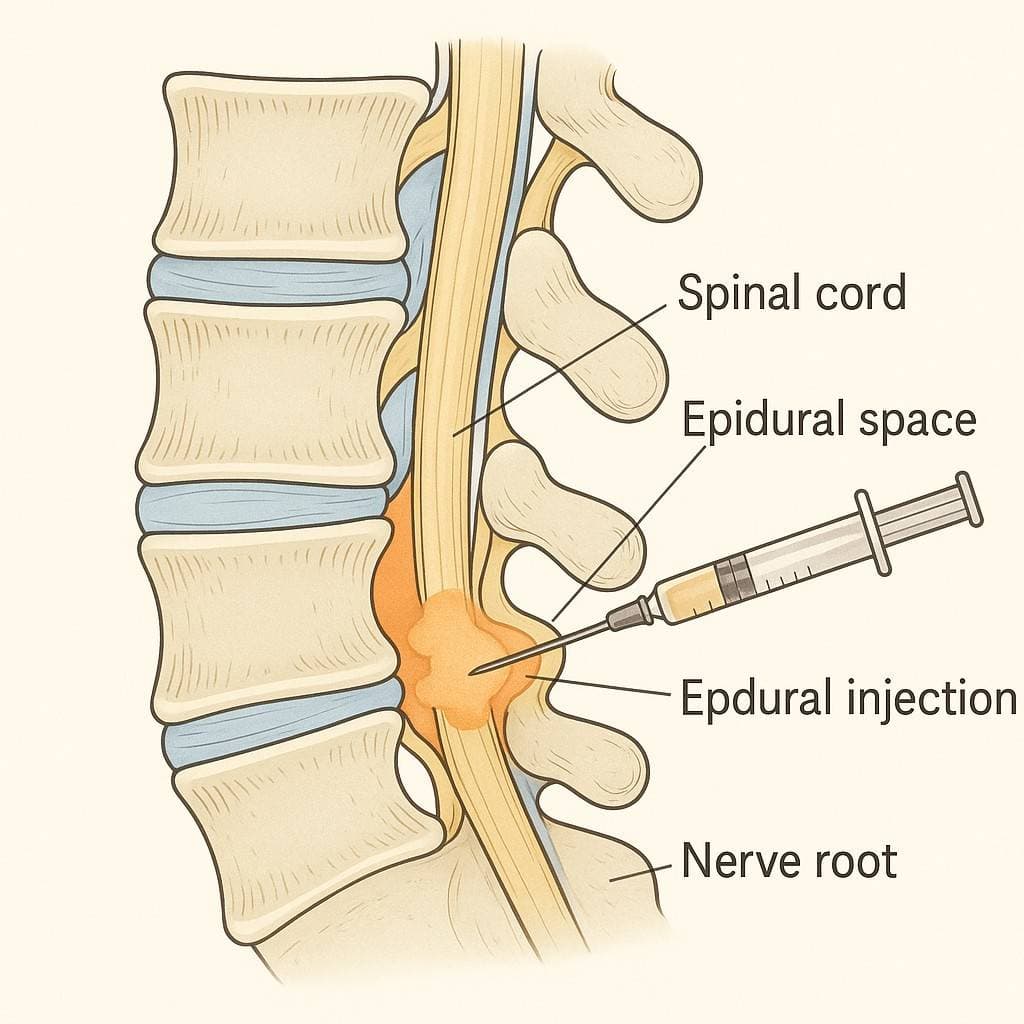
Epidural Steroid Injections
- Indications: Herniated discs, spinal stenosis, radiculopathy (sciatica).
- Technique: Medication delivered into the epidural space around spinal nerve roots.
- Efficacy: 60–80% of patients report significant pain reduction lasting several months.
Facet Joint Injections & Medial Branch Blocks
- Indications: Facet arthropathy—arthritis of spinal joints causing localized back or neck pain.
- Technique: Injection into the joint capsule or anesthetic block of the medial branch nerves supplying the joint.
- Efficacy: Provides 50–70% reduction in mechanical spine pain.
These joint injections Beaumont are effective for mechanical back pain and localized spinal discomfort. For lumbar facet joint pain, specifically, these injections can be highly beneficial, complementing treatments for Lower Back Knee Pain Treatment if the pain is referred.
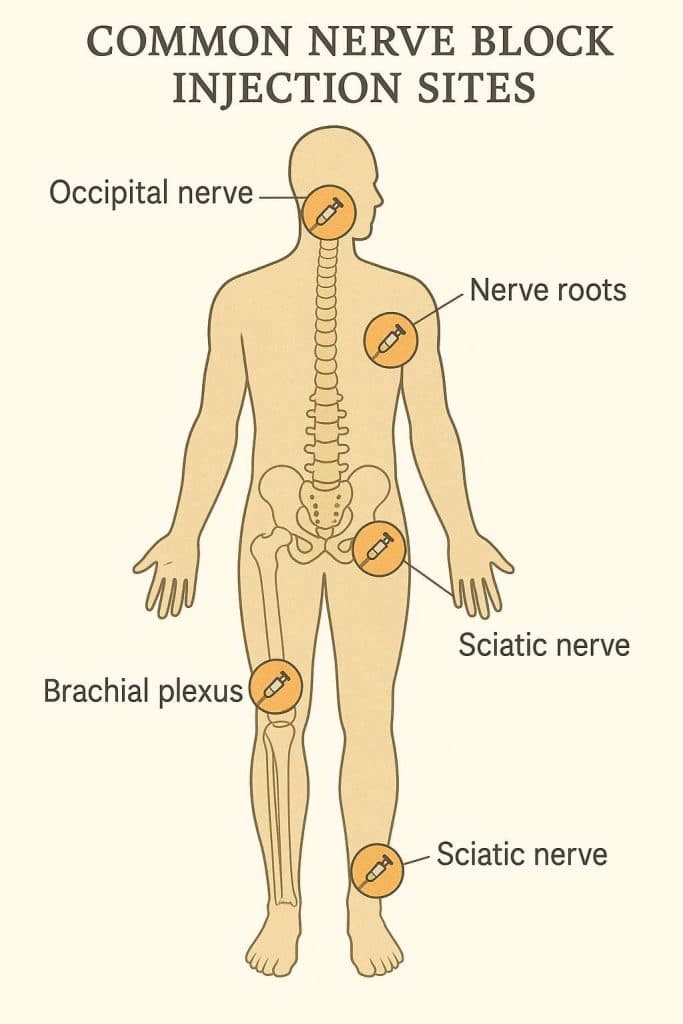
Nerve Block Injections
- Indications: Selective radicular pain, complex regional pain syndrome (CRPS), occipital neuralgia.
- Technique: Anesthetic or steroid placed adjacent to specific nerve roots or peripheral nerves.
- Efficacy: Both diagnostic clarity and therapeutic relief.
These nerve blocks Beaumont are used for a wide range of conditions, providing targeted pain relief.
Intra-Articular Joint Injections
- Indications: Osteoarthritis, inflammatory arthritis, post-traumatic joint pain in knees, shoulders, hips, and ankles.
- Technique: Corticosteroids or hyaluronic acid (viscosupplementation) injected into joint space.
- Efficacy: Hyaluronic acid can provide 4–6 months of improved lubrication and pain reduction.
Trigger Point Injections
- Indications: Myofascial pain syndromes, muscle tension headaches, fibromyalgia tender points.
- Technique: Local anesthetic, sometimes with steroid, injected directly into taut muscle bands to deactivate trigger points.
- Efficacy: Immediate relief in muscle spasm and referred pain patterns.
Conditions Treated by Pain Injections
Pain injections are a versatile tool in our arsenal, offering significant relief for a diverse range of conditions where targeted therapy is most effective:
- Spinal Conditions: Herniated discs, spinal stenosis, degenerative disc disease, radiculopathy.
- Joint Arthritis: Knee, shoulder, hip osteoarthritis; rheumatoid and post-traumatic arthritis.
- Chronic Pain Syndromes: CRPS, myofascial pain, refractory fibromyalgia nodules.
- Headaches/Migraines: Occipital nerve blocks for tension and cervicogenic headaches.
Preparing for Your Pain Injection
Preparation is key to a smooth and successful injection procedure.
Initial Consultation
Your pain specialist conducts a detailed medical history review, physical exam, and imaging assessment to confirm the pain generator and determine the appropriate injection type. This comprehensive pain evaluation ensures tailored, safe treatment.
Pre-Procedure Instructions
Patients may need to temporarily halt blood thinners to reduce bleeding risk. Fasting may be required for sedation. Arrange transportation—driving is discouraged post-procedure due to numbness or sedation effects.
Insurance & Costs
Most medically necessary pain injections are covered under PIP/MedPay for auto injuries and standard health plans. Our billing team assists with prior authorizations and benefits verification to minimize out-of-pocket expenses.
The Injection Procedure: Step by Step
Understanding the procedure itself can help ease any anxiety you might have.
- Preparation & Positioning: The patient is cleansed and draped in a sterile field; local anesthetic applied.
- Image-Guided Needle Insertion: Real-time fluoroscopy or ultrasound directs precise needle placement.
- Contrast Confirmation (if used): A small volume of dye verifies optimal distribution.
- Medication Delivery: Slow injection of steroid–anesthetic mixture.
- Observation: Brief recovery to monitor vital signs and immediate reactions.
The entire procedure takes 15–30 minutes, followed by a short observation period.

Post-Procedure Care
Setting realistic expectations for your post-injection experience and recovery timeline is important.
Immediate Period
Expect mild soreness or bruising at the injection site. Temporary numbness is common with anesthetic. Rest for the remainder of the day—avoid strenuous activities.
Relief Timeline
Anesthetic effect is immediate but short-lived; steroids take 3–7 days to provide maximal relief. Pain reduction can last 3–6 months. Repeat injections may be scheduled when symptoms recur and relief was significant initially.
Potential Side Effects
Mild side effects include transient pain flare, local bruising, or temporary blood sugar elevation in diabetics. Rare complications—infection, bleeding, nerve injury—are minimized by imaging guidance and sterile technique. Seek medical attention for fever, severe pain, or signs of infection.
Success Rates & Long-Term Outcomes
Pain injections, as a part of a comprehensive treatment plan, offer promising success rates for many conditions.
- Epidurals: 60–80% success in radiculopathy.
- Facet Injections: 50–70% relief for mechanical spine pain.
- Joint Injections: Up to 50% reduction in osteoarthritis pain.
Combining injections with physical therapy, chiropractic care, and lifestyle modifications maximizes and prolongs benefits. Integrated care approaches yield superior outcomes versus single modalities.
Are You a Candidate?
Ideal candidates have localized pain that persists despite conservative measures and a clear diagnostic target via imaging. Contraindications include active infections, uncontrolled diabetes, certain blood thinners, and pregnancy. A pain specialist evaluates each patient to ensure suitability.
Why Choose Beaumont Pain Injection Specialists
Our clinic features:
- State-of-the-Art Imaging: Fluoroscopy, ultrasound, and CT ensure precise, safe injections.
- Sterile, Modern Procedure Suites: Adherence to the highest safety protocols.
- Multidisciplinary Care: Coordinated integration with physical therapists, chiropractors, and pain psychologists for comprehensive management.
- Patient-Centered Approach: Individualized plans, ongoing monitoring, and transparent communication ensure optimal care.
Conclusion
Pain injections offer powerful, targeted, and minimally invasive relief for chronic pain conditions when conservative options are insufficient. By understanding the various injection types, their applications, and what to expect, Beaumont residents can make informed choices and participate actively in their pain management journey. For personalized consultation, visit our Pain Management service or book your appointment today to explore the relief that precise, image-guided injections can provide.

Medically reviewed by
Verified
DS
Deepak Sharma
DC
Owner & Doctor of Chiropractic
Deepak Sharma, DC is a licensed Doctor of Chiropractic and the owner of Car Accident Cares in Beaumont, TX. He reviews the clinical content published across the site and works with a multidisciplinary network of MDs, chiropractors, imaging centers, and pain-management specialists focused on accurate diagnosis, evidence-based treatment, and complete recovery for motor-vehicle-accident victims across Beaumont and Houston.