The Role of a Primary Care Physician in Managing Chronic Conditions


Understanding Chronic Conditions and Chronic Illness
The Critical Role of Primary Care in Chronic Disease Management
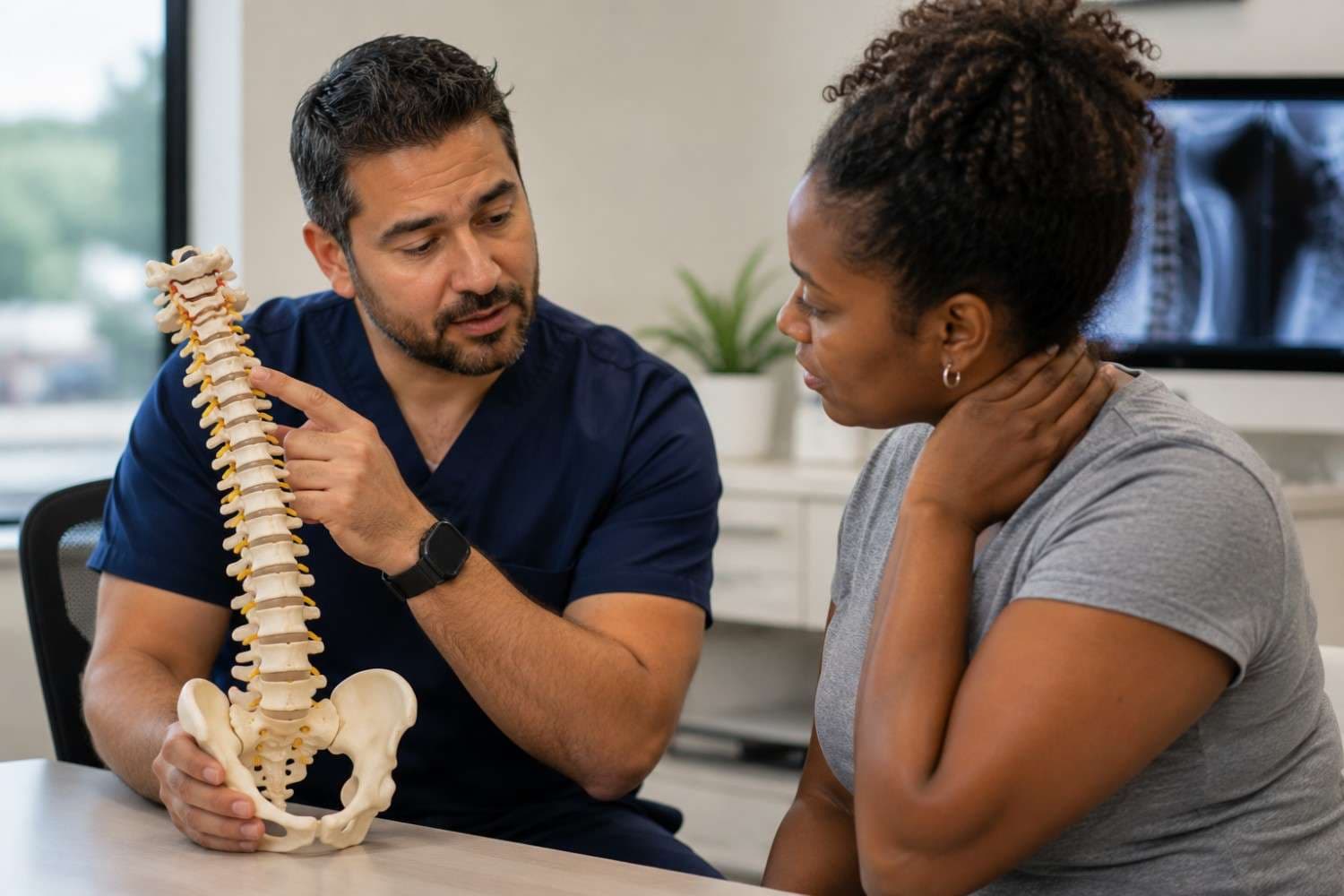
- Comprehensive medical history: Reviewing past injuries, prior treatments, symptom patterns, and lifestyle factors to understand the full context of your health condition.
- Physical examination: Range of motion testing, neurological checks, and palpation to pinpoint where dysfunction originates.
- Diagnostic imaging: X-rays reveal bone alignment and fractures, while MRI scans detect soft tissue damage, disc herniation, and nerve compression that X-rays cannot capture — often the critical step in explaining persistent post-accident pain.
Chronic Care Management: Proactive Strategies for Better Health
- Regular monitoring visits: Consistent visits with your primary care physician allow your doctor to track symptom trends and catch changes before they escalate. Research shows that regular engagement with primary care improves long-term health outcomes significantly compared to episodic, crisis-driven care.
- Preventive care: Routine screenings, early intervention, and proactive lifestyle guidance reduce the risk of secondary complications. Preventing conditions from worsening is one of the most cost-effective strategies in chronic health management.
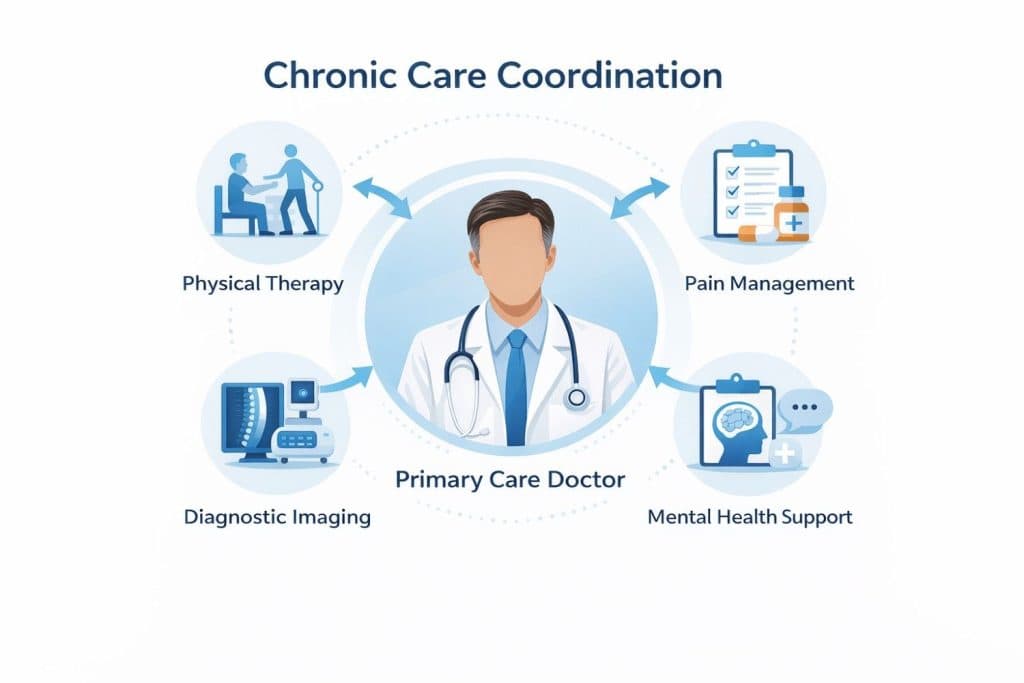
- Physical therapy coordination: For musculoskeletal injuries, your doctor works closely with physical therapists to rebuild strength and restore range of motion — collaboration that can mean the difference between full recovery and permanent limitation.
- Lifestyle counseling: Diet, sleep, physical activity, and stress management all directly influence chronic pain and inflammation. Your physician tailors guidance to your unique health needs and lifestyle.
- Interventional referrals: When conservative treatment is insufficient, your doctor may refer you for advanced pain management options, including injections, nerve blocks, or trigger point therapy.
Tips for Managing Chronic Conditions Day to Day
- Keep a symptom journal to give your doctor precise data between visits.
- Stay consistent with medications — never adjust or stop a prescription without consulting your physician.
- Move within your limits with gentle, low-impact activity to reduce stiffness and support circulation.
- Attend every follow-up — continuity is what prevents conditions from worsening and improves long-term health outcomes.
- Communicate openly about what is or is not working so your care team can adjust your management plan in real time.
Medication Management in Primary Care for Chronic Conditions
- NSAIDs: Reduce inflammation and pain from musculoskeletal injuries, arthritis, and soft tissue damage — for example, persistent lower back inflammation following a rear-end collision.
- Analgesics: Managed carefully to provide relief without dependence.
- Muscle relaxants: Effective for spasm-related neck and back pain common among car accident survivors.
- DMARDs: Disease-modifying drugs used when chronic pain stems from inflammatory joint conditions like rheumatoid arthritis.
The 4 C's of Chronic Disease Management
- Coverage: Consistent access to care without logistical or financial barriers — a local Beaumont doctor makes primary care services accessible so patients don’t delay treatment until a crisis arises.
- Care: Evidence-based, personalized treatment tailored to the patient’s diagnosis, history, and goals — not a one-size-fits-all protocol.
- Continuity: An ongoing physician-patient relationship where health changes are detected early. Regular visits are what make continuity possible, and continuity is what improves long-term health outcomes.
- Coordination: Integrating chiropractors, physical therapists, pain specialists, and orthopedic surgeons so every provider is aligned around the same recovery goals.
Personalized Care for Better Health: Why Beaumont Residents Choose Primary Care
Ready to Manage Your Chronic Condition with a Primary Care Physician?
Conclusion
Frequently Asked Questions About Car Accident Care in Beaumont
How soon after a car accident should I see a primary care physician?
You should see a primary care physician within 24 to 72 hours after a collision, even if you feel fine. Adrenaline and shock frequently mask the pain of severe injuries, causing symptoms like whiplash, soft tissue damage, or spinal microtrauma to emerge days later. Delaying treatment not only allows inflammation to worsen and potentially develop into chronic pain, but it also creates a detrimental gap in your medical records. Seeing a doctor immediately establishes a direct clinical link between the accident and your injuries, which is essential for your physical recovery and any future auto insurance claims.
Why see a primary care doctor instead of just an urgent care or ER?
While the Emergency Room is critical for immediate, life-threatening trauma (like severe fractures or bleeding), a primary care physician is essential for long-term recovery and chronic injury management. ER doctors treat acute crises and discharge you. A primary care doctor manages the ongoing healing process. They track your symptom trends, adjust medications, coordinate with physical therapists, and provide referrals to local pain management specialists. This continuity of care is the key to preventing a temporary post-collision injury from evolving into a permanent chronic pain condition.
Can a primary care physician help with medication management for chronic pain?
Yes, medication management is a core pillar of primary care. For patients in Beaumont managing multiple chronic conditions, an MD ensures that pain relief protocols do not conflict with other medications. Your doctor may prescribe NSAIDs for inflammation, muscle relaxants for post-accident spasms, or nerve-stabilizing medications for neuropathic pain. Unlike a one-size-fits-all approach, a primary care physician regularly reviews your dosage, monitors for side effects, and adjusts the plan as you progress through rehabilitation, ensuring your medication supports—rather than hinders—your overall recovery.
Why is my minor car accident injury turning into chronic pain?
Chronic pain often develops when acute injuries—even from low-speed or “minor” collisions—are left untreated. A crash causes microtrauma to muscles, ligaments, and spinal discs. Without early intervention, this trauma leads to persistent inflammation and scar tissue formation. Over time, your nervous system can become hyper-sensitized, meaning nerve pathways continue to send pain signals long after the initial tissue has technically healed. This is why proactive strategies, such as early physical therapy coordination and medical management by a primary care doctor, are vital to stopping the cycle of chronic pain before it permanently sets in.
What are the "4 C’s" of chronic disease management in primary care?
The 4 C’s—Coverage, Care, Continuity, and Coordination—form the framework for high-quality medical oversight. In Beaumont, this means having Coverage through local accessible clinics, receiving evidence-based Care tailored to your injury, maintaining Continuity with the same doctor who knows your history, and benefiting from Coordination between your MD and other specialists. When these four elements are present, health outcomes improve significantly. For accident survivors, this framework ensures that no part of their recovery—from mental health to physical mobility—is overlooked by their primary care team.
How does seeing a doctor help my car accident insurance claim?
Seeing a doctor immediately creates an official, time-stamped medical paper trail that directly links your injuries to the specific car accident. Insurance adjusters actively look for “gaps in treatment”—periods where you delayed seeing a doctor—to argue that your injuries are either not serious or were caused by a pre-existing condition. By maintaining consistent visits with a primary care physician, you generate essential evidence (like diagnostic imaging, treatment plans, and physical therapy notes) that proves the severity of your condition, ensuring you receive fair coverage for your medical expenses.
Will my primary care doctor prescribe pain medication for an auto injury?
Yes, if your pain or inflammation is severe enough to disrupt your sleep, work, or physical therapy, your primary care physician will prescribe appropriate medications. Treatment plans typically start with conservative options like prescription-strength NSAIDs to reduce joint and tissue inflammation. If you are experiencing severe muscle spasms—a common symptom of whiplash—muscle relaxants may be prescribed. For acute pain, doctors may carefully manage short-term analgesics. The goal of medication management in primary care is to provide enough relief so you can actively participate in your rehabilitation without developing a dependence.
Can a primary care physician refer me to a physical therapist or chiropractor?
Absolutely. A hallmark of excellent injury recovery is the “coordination of care.” Primary care physicians act as the architect of your recovery. If your physical examination and diagnostic imaging reveal musculoskeletal dysfunction, your doctor will directly refer you to trusted local physical therapists, chiropractors, or orthopedic specialists. By having a primary care doctor oversee these referrals, you ensure that all your healthcare providers are communicating, sharing the same electronic health records, and working together toward a unified recovery goal rather than offering disconnected or conflicting treatments.
How long does it take to recover from whiplash and soft tissue injuries?
Recovery timelines vary wildly depending on the severity of the collision and the patient’s immediate medical response. Mild soft tissue strains or minor whiplash may resolve in 4 to 6 weeks with consistent physical therapy, rest, and medical management. However, more severe soft tissue damage, ligament tears, or nerve compression can take 3 to 6 months—or even longer—to reach maximum medical improvement. If ignored, these injuries can easily transition into lifelong chronic conditions. Regular monitoring by a primary care doctor ensures your treatment adapts efficiently as your healing progresses.
What diagnostic tests will a doctor run after a car crash?
A thorough primary care physician will start with a comprehensive physical exam, testing your range of motion, reflexes, and neurological responses to pinpoint areas of dysfunction. Depending on those clinical results, they will order specific diagnostic imaging. X-rays are typically used first to rule out bone fractures and check spinal alignment. Because X-rays cannot show soft tissue, doctors frequently order MRI scans or medical ultrasounds to detect hidden damage like herniated discs, torn ligaments, and compressed nerves, which are often the true source of persistent post-accident pain.
Deepak Sharma, DC is a licensed Doctor of Chiropractic and the owner of Car Accident Cares in Beaumont, TX. He reviews the clinical content published across the site and works with a multidisciplinary network of MDs, chiropractors, imaging centers, and pain-management specialists focused on accurate diagnosis, evidence-based treatment, and complete recovery for motor-vehicle-accident victims across Beaumont and Houston.