The Importance of Accurate Imaging for Injury Diagnosis in Beaumont, TX
DS
By Deepak Sharma, DC
Medically reviewed
Owner & Doctor of Chiropractic · 5 min read · Published · Updated · Last reviewed
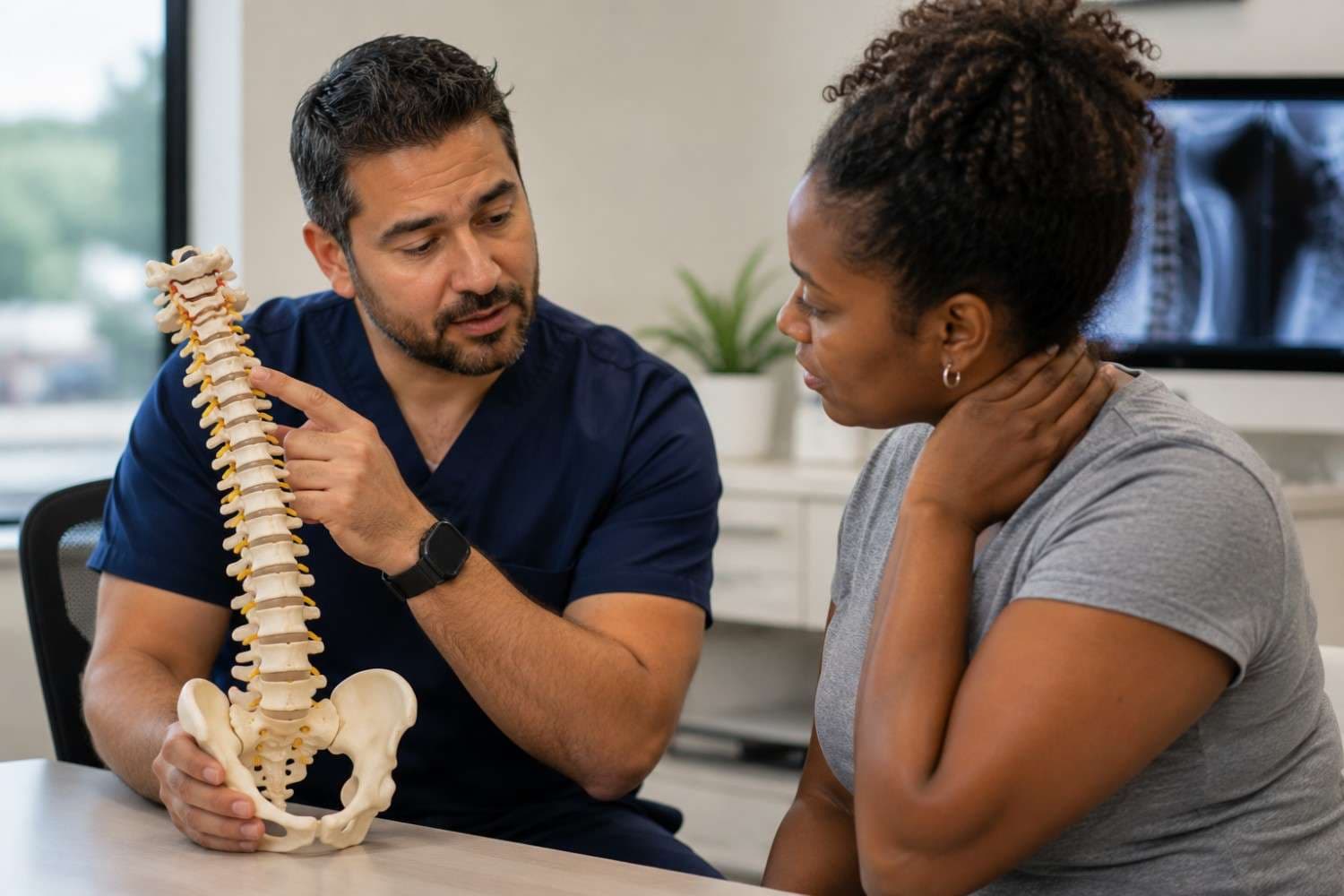
After a car accident or a workplace incident, the adrenaline rush can be deceptive. You might walk away feeling “fine,” or perhaps just a little sore. However, internal trauma and soft tissue injuries often hide behind that initial shock. This is why reliance on how you feel is a dangerous metric for recovery.
For residents in our community, securing an accurate imaging injury diagnosis Beaumont TX is not just a medical step; it is the foundation of your entire physical and financial recovery. Without a precise look inside the body, doctors are essentially guessing—and when it comes to your spine, joints, and long-term mobility, guessing is not an option.
This guide explores why diagnostic imaging is the gold standard for injury care and how it protects accident victims from long-term chronic pain.
Why Accurate Imaging Is Essential for Injury Diagnosis
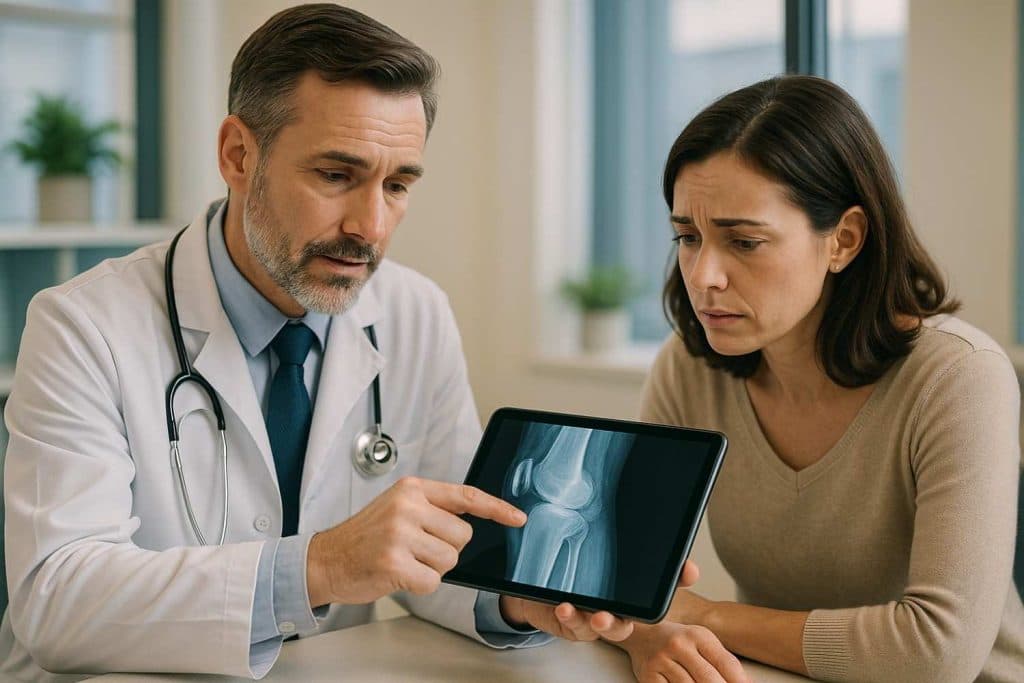
A physical examination is the starting point of any medical evaluation, but it has significant limitations. A doctor can palpate a swollen knee or test the range of motion in a stiff neck, but they cannot see a hairline fracture in the vertebrae or a tear in the rotator cuff with the naked eye.
The importance of medical imaging Beaumont cannot be overstated, specifically for high-impact injuries. Many car accident victims suffer from “silent” injuries—trauma that doesn’t present immediate, agonizing pain but degrades the body over weeks or months.
Common Scenarios Where Imaging is Crucial
- Whiplash vs. Disc Herniation: Both may present as neck pain, but whiplash is a muscle/ligament issue, while a herniation involves spinal discs pressing on nerves. Only an MRI can spot the difference.
- Micro-Fractures: X-rays are needed to catch small bone breaks that might feel like deep bruising but can heal improperly if not immobilized.
- Internal Bleeding: In severe accidents, a CT scan is vital to ensure organs haven’t been damaged, a condition that can be life-threatening if missed.
Understanding why imaging is needed for injury cases goes beyond health; it also impacts your insurance or legal claims. If an injury isn’t documented via imaging, insurance adjusters may argue it doesn’t exist. Learn more about diagnostic imaging in Beaumont.
How Imaging Leads to a Clearer Injury Diagnosis
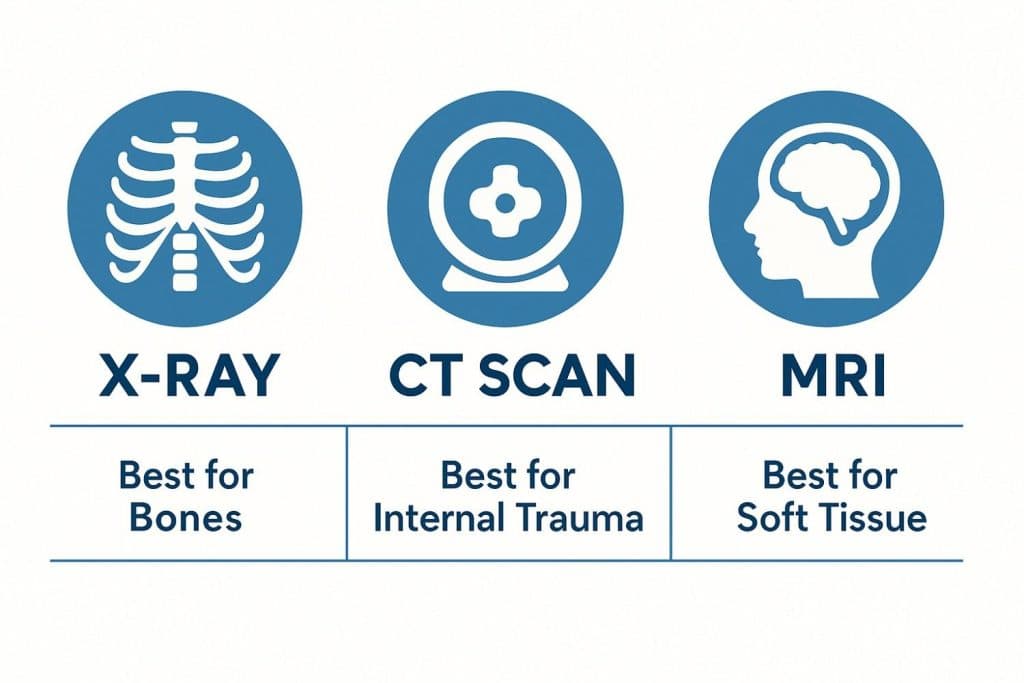
Achieving a clear diagnosis injury Beaumont requires matching the right technology to the patient’s symptoms. Modern imaging centers utilize three primary modalities to create a complete roadmap of your trauma.
1. Digital X-Rays: The First Line of Defense
X-rays are typically the first step. They are fast, painless, and excellent at visualizing dense structures like bone.
- Best for: Detecting fractures, dislocations, and alignment issues in the spine.
- Limitation: They generally pass right through soft tissue, making them ineffective for spotting muscle tears or nerve damage. For more visit our digital X-rays for injuries.
2. CT Scans (Computed Tomography)
Think of a CT scan as a 3D X-ray. It takes multiple images from different angles to create cross-sectional views of the body.
- Best for: Complex fractures, internal bleeding, and chest or abdominal trauma.
- Why it matters: CTs are critical immediately following high-speed collisions to rule out life-threatening internal injuries. Visit CT scans in Beaumont.
3. MRI (Magnetic Resonance Imaging)
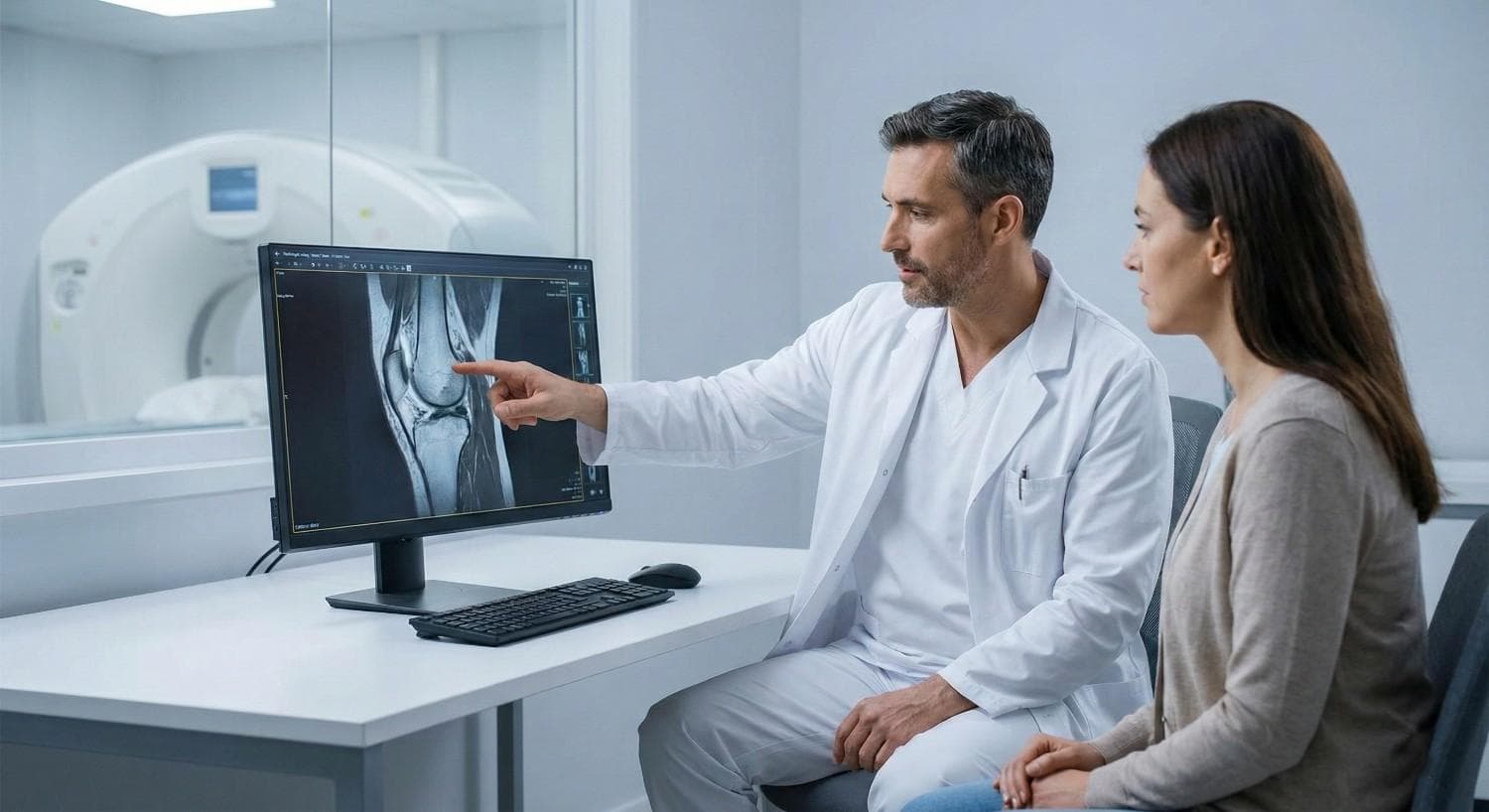
The MRI is the powerhouse of soft tissue diagnostics. Using powerful magnets and radio waves, it creates detailed images of organs and tissues.
- Best for: Herniated discs, torn ligaments (ACL/MCL), rotator cuff tears, and brain trauma (TBI).
- Why it matters: For most car accident victims experiencing lingering pain, the MRI is the tool that finally reveals the root cause. See our MRI in Beaumont.
By utilizing these technologies, local physicians can move from “suspecting” an injury to “confirming” it with sub-millimeter precision.
From Accurate Imaging to Better Recovery: Impact on Treatment Planning
The ultimate goal of diagnostics is to formulate a plan that gets you back to your life. An accurate diagnosis dictates the treatment protocol. If a patient is misdiagnosed—for example, treating a torn ligament with simple heat therapy—the injury may worsen, leading to permanent instability or chronic arthritis.
The Roadmap to Recovery
- Visualization: Imaging reveals the exact location and severity of the damage.
- Differentiation: The doctor distinguishes between surgical and non-surgical requirements.
- Customization: A tailored plan is created, which may include chiropractic care, physical therapy, pain management, or orthopedic intervention.
- Monitoring: Follow-up imaging tracks how the injury is healing over time.
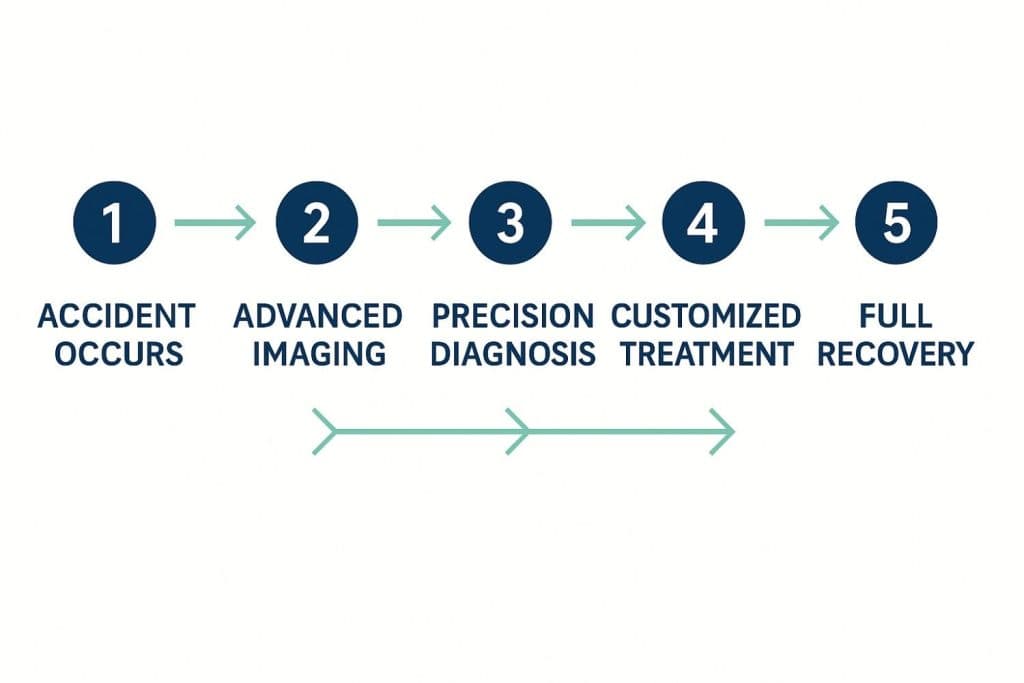
For patients in Beaumont, this targeted approach means spending less time in pain and more time healing correctly. Instead of generic “rest and ice” advice, you receive a protocol designed for your specific physiology and injury profile.
Don’t leave your health to chance. Get an accurate injury diagnosis to start your recovery off right.
Also, consider how this impacts your ability to access specialist care. Many specialists, such as orthopedic surgeons or neurologists, will not accept a new patient without recent, high-quality imaging scans. Schedule an MD consultation for injury evaluation.
Choosing the Right Imaging Service in Beaumont, TX
Not all imaging is created equal. When looking for providers in the Golden Triangle area, several factors determine the quality of your care and the utility of your results.
What to Look For:
- High-Field vs. Open MRI: Understanding the technology matters. While Open MRIs are comfortable, High-Field units often provide clearer images necessary for detecting subtle spinal injuries.
- Board-Certified Radiologists: The machinery takes the picture, but a skilled human must interpret it. Ensure your Beaumont facility utilizes board-certified radiologists who specialize in trauma.
- Speed of Reporting: In injury cases, waiting weeks for a report is unacceptable. Local Beaumont providers who prioritize accident care often offer faster turnaround times for reports, allowing your treating doctor to move forward quickly.
By choosing a local facility integrated with injury care networks, you ensure that your scans don’t just sit in a portal—they are immediately used to inform your treatment. Explore common injuries and recovery plans.
Conclusion
Your health is your most valuable asset, and preserving it after an accident requires precision, not guesswork. The importance of accurate imaging for injury diagnosis Beaumont TX, lies in its ability to reveal the unseen, allowing for treatments that actually fix the problem rather than just masking the symptoms.
Whether it is a Digital X-ray to check for fractures or an MRI to map out soft tissue damage, these tools are the bridge between pain and recovery. Do not wait for the pain to become unbearable. Early detection leads to better outcomes, reduced recovery times, and a documented path to health.
Medically reviewed by
Verified
DS
Deepak Sharma
DC
Owner & Doctor of Chiropractic
Deepak Sharma, DC is a licensed Doctor of Chiropractic and the owner of Car Accident Cares in Beaumont, TX. He reviews the clinical content published across the site and works with a multidisciplinary network of MDs, chiropractors, imaging centers, and pain-management specialists focused on accurate diagnosis, evidence-based treatment, and complete recovery for motor-vehicle-accident victims across Beaumont and Houston.