
How Often Should You See a Chiropractor After an Injury?
DS
By Deepak Sharma, DC
Medically reviewed
Owner & Doctor of Chiropractic · 5 min read · Published · Updated · Last reviewed

Introduction
Following an injury in Beaumont, TX, one of the most critical questions affecting your recovery is: how often should you see a chiropractor after an injury? The frequency isn’t arbitrary—it’s a scientifically-backed factor that can determine whether you achieve complete healing or face lingering pain and dysfunction.
Evidence shows that 75% of car accident victims benefit significantly from structured chiropractic care, while patients receiving optimal visit frequency experience 40% faster recovery times. Understanding the factors that influence your chiropractic treatment frequency empowers you to make informed decisions about your healing journey and avoid the chronic pain that affects 15-40% of inadequately treated injury victims.

Key Factors Determining Visit Frequency
Injury Type and Severity
The nature and intensity of your injury primarily determine your chiropractic visit schedule. Acute injuries—such as whiplash affecting up to 83% of rear-end collision victims—typically require intensive initial care of 2-3 visits weekly for the first 2-3 weeks during the acute inflammatory phase.
Research demonstrates that early intervention within 72 hours can reduce long-term disability by 60%. More severe injuries may necessitate even higher initial frequency, with gradual tapering as improvement becomes evident. The specific injury mechanism—whether from auto accidents, sports incidents, or workplace injuries—influences the tailored treatment approach.
Individual Response to Treatment
Every patient responds uniquely to chiropractic care, significantly influencing chiropractic treatment frequency. Age, overall health status, lifestyle, and injury chronicity play crucial roles. Patients with worse baseline pain and functional limitations often require more frequent visits initially but show greater overall improvement with consistent care.
Studies reveal that some individuals experience significant relief after 1-2 sessions, while others require consistent adjustments over several weeks. Your personal goals—immediate pain management versus long-term functional restoration—also guide your personalized chiropractic visit schedule.
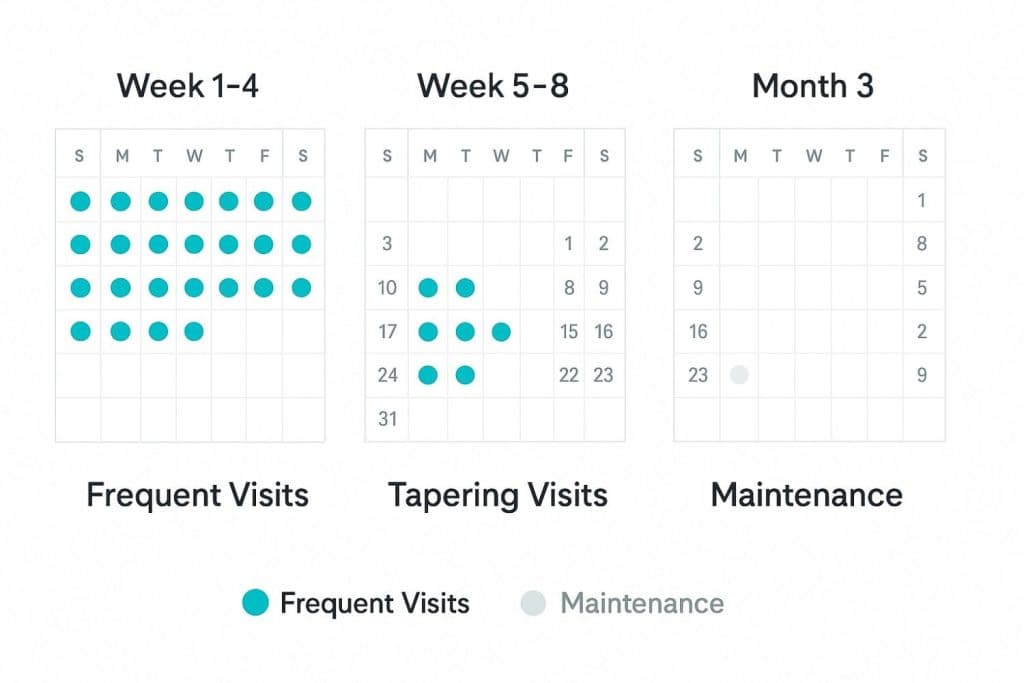
Standard Treatment Timeline Phases
01
Phase 1: Acute Care (Weeks 1-4)
The initial intensive phase typically involves 2-3 visits weekly for 2-4 weeks. Primary goals include pain reduction, inflammation control, and basic function improvement. Patients often notice significant improvement in daily activities after 3-6 visits. During acute injury management, chiropractors employ gentler techniques, including instrument-assisted adjustments and adjunctive therapies.
02
Phase 2: Stabilization (Weeks 4-8)
As symptoms improve, visit frequency tapers to 1-2 visits weekly. Focus shifts to improving range of motion, enhancing stability, and preventing reinjury through active rehabilitation exercises alongside manual adjustments. Research shows that approximately 12 treatment sessions over 6 weeks can lead to significant and lasting relief for conditions like back pain.
03
Phase 3: Maintenance and Prevention
Once recovery goals are achieved, maintenance care ranges from monthly to quarterly visits depending on individual needs. This preventive approach helps maintain progress, prevents minor tensions from escalating, and supports ongoing well-being—similar to routine dental checkups for optimal spinal health.
Evidence-Based Frequency Guidelines
Research-Supported Recommendations
Current clinical guidelines for acute/subacute lower back pain suggest 2-3 sessions weekly for 2-4 weeks. For milder conditions, 1-6 sessions per episode may suffice, while moderate-to-severe conditions could require 2-3 sessions weekly initially.
A dose-response study on chronic pain found approximately 5.7-point improvement in pain and function per 3 additional visits. Patients receiving care 3-4 times weekly for 3 weeks showed substantial relief, underscoring the importance of consistent chiropractic treatment frequency during initial injury recovery phases.
Safety and Monitoring
Reactions to spinal manipulation are common and typically benign, usually arising shortly after treatment and disappearing within 24-48 hours. The most frequent reactions include local discomfort reported in about two-thirds of cases, followed by pain in other areas, fatigue, or headache. These reactions are most common at treatment initiation and generally resolve by the following day.
Individual Factors Affecting Your Schedule
01
Lifestyle and Occupation Considerations
Daily activities significantly impact your ideal how often chiropractor after injury schedule. Individuals with physically demanding jobs may benefit from more frequent adjustments due to added musculoskeletal strain. Heavy labor increases visit frequency by less than half a visit per month on average, while sedentary lifestyles may require fewer immediate visits but still need preventive care for posture-related issues.
02
Insurance and Practical Factors
Insurance coverage influences chiropractic visit schedule decisions. Patients with comprehensive chiropractic coverage average about half a visit more per month than those without coverage. High-deductible plans may encourage cost-conscious decisions, while new patients within 30 days typically have higher initial frequency that naturally reduces as conditions improve.

When to Adjust Your Treatment Schedule
Signs You May Need More Frequent Visits
Key indicators for increased chiropractic visit schedule include:
- Persistent or worsening pain
- Noticeable decrease in function
- Appearance of new symptoms
- Frustratingly slow progress toward recovery goals
Patients starting with worse baseline function often require more visits but show greater overall improvement with higher frequency care.
Signs You Can Reduce Visit Frequency
Positive indicators suggesting reduced visit frequency include:
- Consistent pain reduction
- Significant improvement in daily function
- Better sleep quality and increased mobility
- Comfortable performance of normal activities
The approach should involve gradual tapering rather than abrupt cessation, finding a personal rhythm that evolves with your body’s needs and lifestyle demands.
Conclusion
The optimal answer to how often should you see a chiropractor after an injury depends on personalized assessment of injury type, severity, individual response, and treatment phase. While initial intensive care of 2-3 visits weekly for 2-4 weeks is common for acute conditions, this typically transitions into maintenance schedules tailored to evolving needs.
Research consistently supports that patients receiving more than once-weekly chiropractic visits experience significantly better improvement in both pain and function. Open communication with your chiropractor ensures treatment frequency adjustments based on progress, changing symptoms, and health goals—the foundation of successful injury recovery chiropractic in Beaumont, TX.

Medically reviewed by
Verified
DS
Deepak Sharma
DC
Owner & Doctor of Chiropractic
Deepak Sharma, DC is a licensed Doctor of Chiropractic and the owner of Car Accident Cares in Beaumont, TX. He reviews the clinical content published across the site and works with a multidisciplinary network of MDs, chiropractors, imaging centers, and pain-management specialists focused on accurate diagnosis, evidence-based treatment, and complete recovery for motor-vehicle-accident victims across Beaumont and Houston.