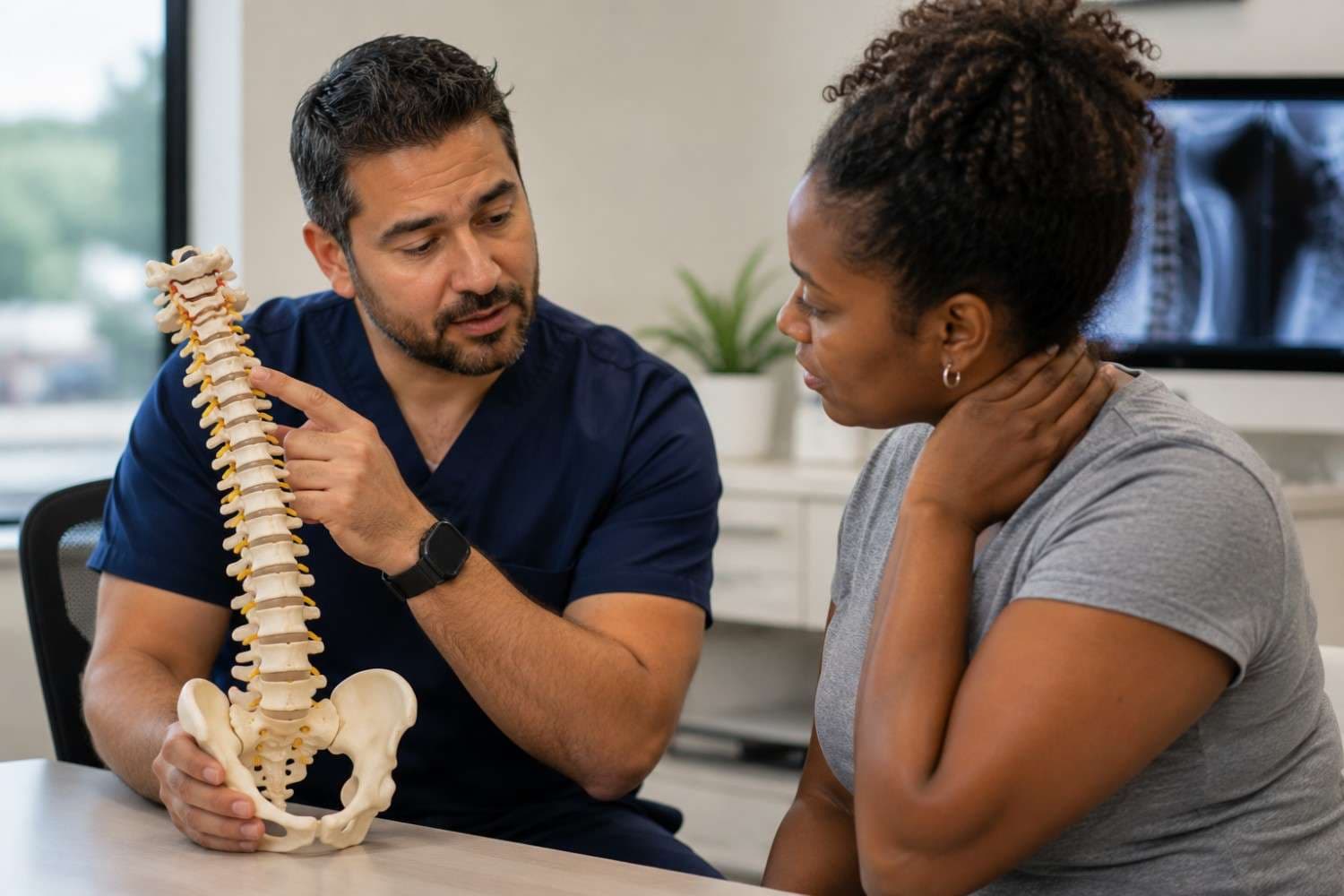
How Long Do Car Accident Injuries Last? Understanding Recovery Timelines in Beaumont, TX
DS
By Deepak Sharma, DC
Medically reviewed
Owner & Doctor of Chiropractic · 5 min read · Published · Updated · Last reviewed

Introduction
Every year, Jefferson County records over 8,500 motor vehicle crashes, with thousands of drivers initially walking away feeling unharmed—only to develop pain, stiffness, and other symptoms days later. This often leaves accident victims in Beaumont, TX, with a pressing question: how long do car accident injuries last? The truth is, there’s no single answer. Recoveries vary dramatically based on injury type, patient health, treatment timing, and care quality. While no single timeline fits every individual, understanding average recovery benchmarks can guide your expectations and encourage prompt medical attention. This clarity empowers you to seek early, consistent treatment, reducing the risk of chronic complications and speeding your return to daily life. For full-spectrum support, explore our Car Accident Care.
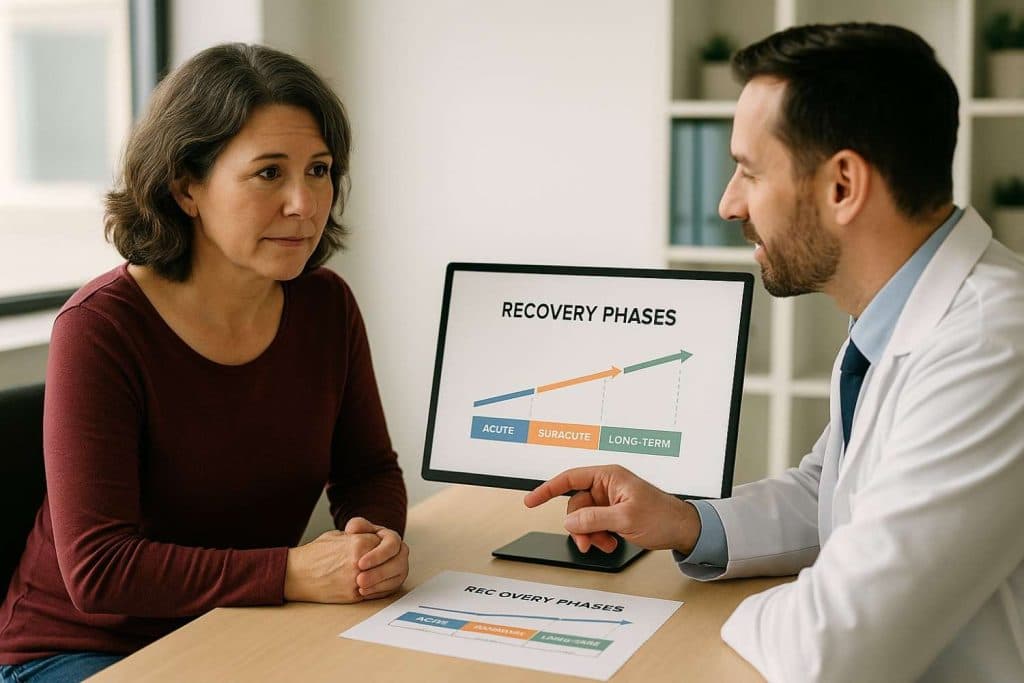
Factors That Determine Recovery Time
01
Injury Type and Severity
The most significant factor influencing your car accident injury recovery time is the specific type and severity of the injury. Injuries range from minor soft tissue sprains to life-threatening internal trauma. Soft tissue injuries—sprains, strains, and contusions—account for nearly 70% of crash-related cases and often resolve within 6–12 weeks with proper therapy. In contrast, complex fractures, spinal cord damage, or internal organ injuries can demand several months of bone union, rehabilitation, and occasional surgical intervention.
02
Age and Overall Health
Younger patients typically heal faster due to robust cell regeneration, stronger immune responses, and healthy collagen production. Individuals over 50 or those with comorbidities such as diabetes, autoimmune disorders, or chronic pulmonary disease often face 20–30% longer recovery times because these conditions impair healing pathways and increase inflammation.
03
Treatment Timing and Quality
Early intervention—ideally within 24–72 hours of the crash—can reduce total recovery time by up to 25% and significantly lower the risk of chronic pain syndromes. Delayed care often allows small injuries to worsen, complicating treatment. Diligent attendance at physical therapy sessions, chiropractic appointments, and follow-up medical evaluations is essential to optimize healing and function. If initial pain is masked by adrenaline, still schedule an immediate professional evaluation.
Recovery Timelines for Common Injuries
Whiplash and Neck Injuries
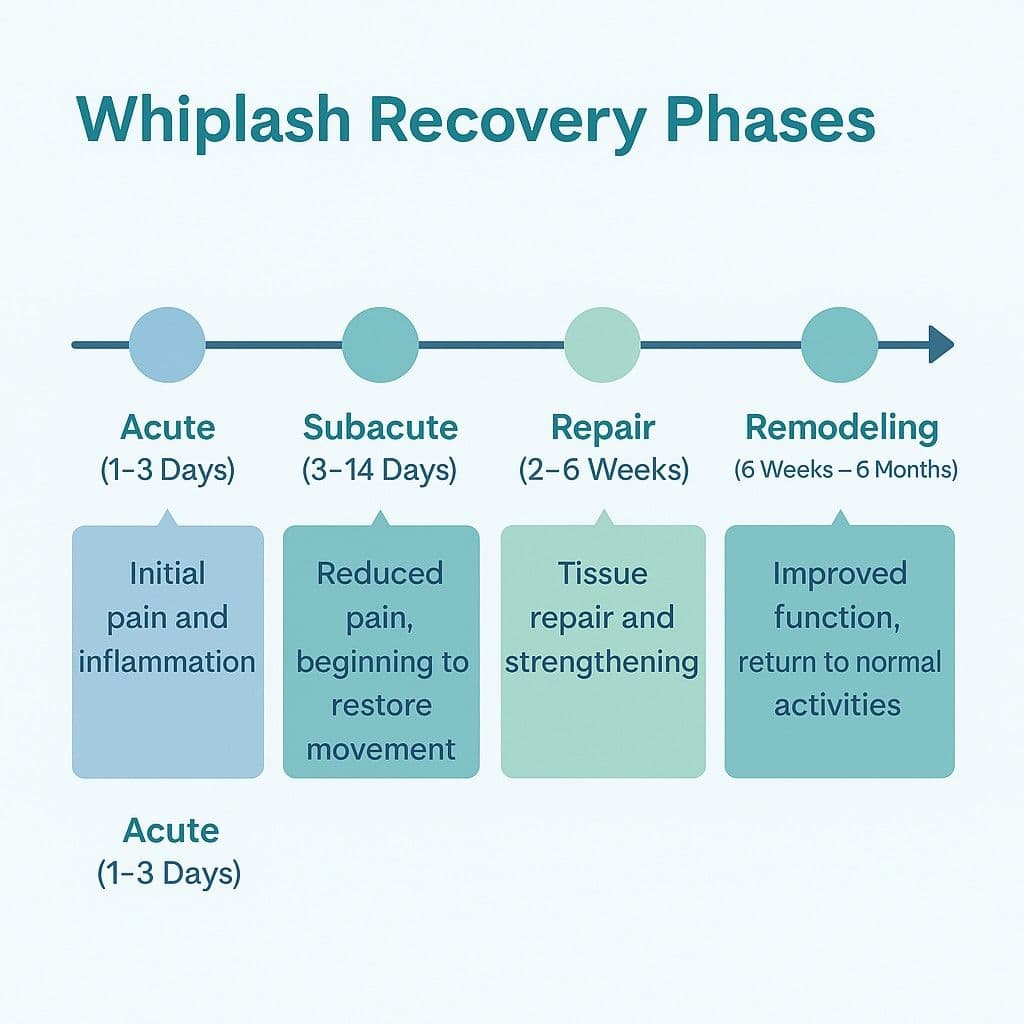
Whiplash is among the most frequently reported post-crash complaints. Its recovery phases include:
- Acute (1–3 days): Muscle spasms and inflammation peak.
- Subacute (3–14 days): Pain and stiffness gradually decrease; gentle range-of-motion exercises begin.
- Repair (2–6 weeks): Tissue regeneration accelerates with targeted therapy.
- Remodeling (6 weeks–6 months+): Scar tissue matures; full strength and flexibility may not return until 6–7 months.
Studies show up to 50% of whiplash patients experience lingering symptoms beyond six months, emphasizing the need for prolonged, multi-modal care. For expert neck-injury support, explore our whiplash treatment options.
Soft Tissue Injuries
Soft tissues (muscles, ligaments, tendons) heal through four stages:
- Inflammation (1–3 days): Rest, ice, and anti-inflammatories manage swelling.
- Proliferation (3–14 days): New tissue forms; gentle mobilization begins.
- Repair (2–6 weeks): Strengthening exercises restore function.
- Remodeling (6 weeks–6 months): Collagen alignment and tissue strengthening conclude.
Most patients achieve near-full recovery by 8–12 weeks with consistent physical or chiropractic therapy, though residual stiffness can persist into the remodeling phase. For comprehensive soft tissue injury treatment, explore our dedicated services.
Fractures and Bone Injuries
Bone healing typically requires 6–8 weeks for union, depending on fracture location and complexity. However, regaining full strength, flexibility, and proprioception often extends recovery by an additional 4–12 weeks of rehabilitation. Factors such as smoking, poor nutrition, and inactivity can prolong healing significantly.
Traumatic Brain Injuries (TBIs)
TBIs vary widely:
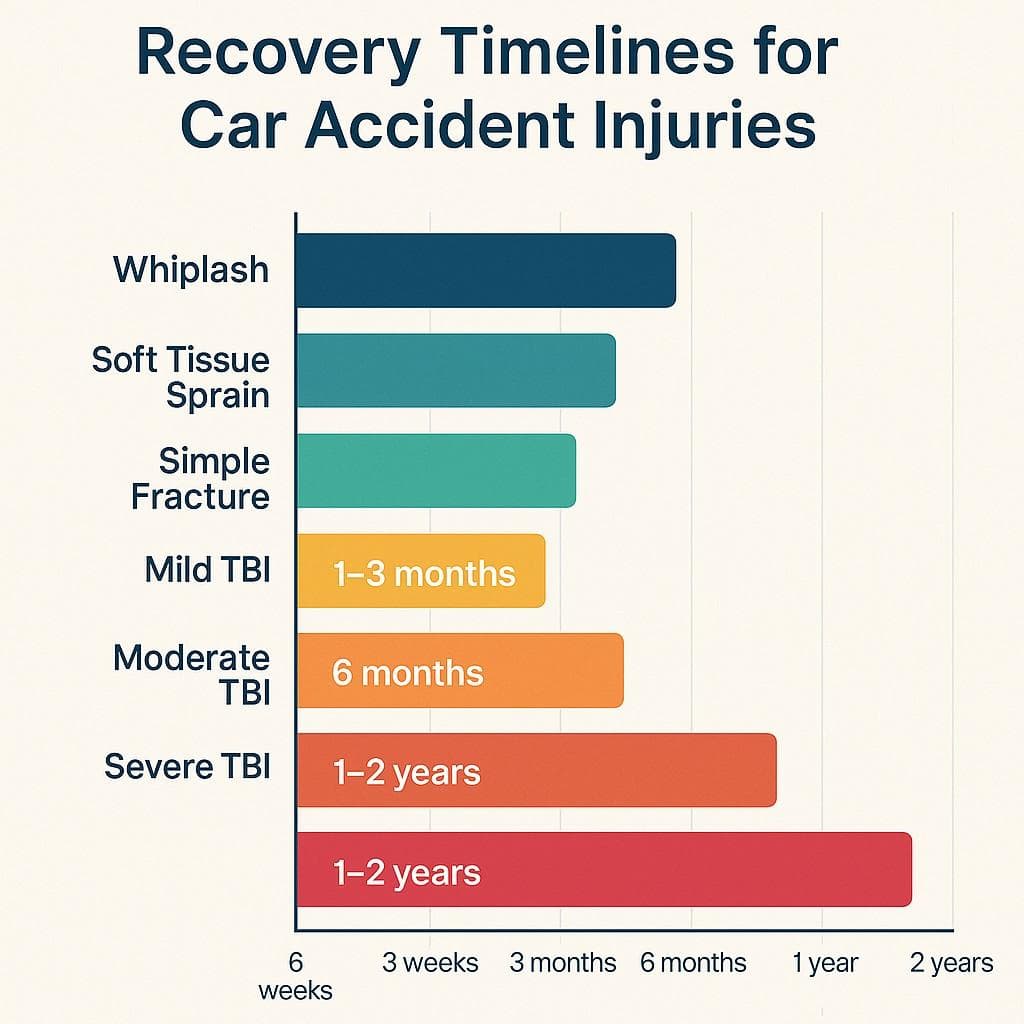
- Mild (concussion): Recovery often completes within 1–4 weeks.
- Moderate: Symptoms and deficits may last weeks to months.
- Severe: Rehabilitation can continue for a year or more, with some cases requiring up to 2 years to reach maximal neurological recovery.
Longer unconsciousness and more severe initial symptoms correlate with extended recovery. Persistent headaches, memory issues, or cognitive deficits warrant specialized care—visit our headache/migraine specialist for targeted treatment.
The Healing Process: What to Expect
When thinking about healing after car crash, it’s important to set realistic expectations. By six weeks, most patients feel markedly better—but deeper structures like ligaments and fascia continue maturing for months. Recovery isn’t a straight path: anticipate fluctuations in symptoms, occasional setbacks, and plateaus. Skipping sessions or stopping therapy early can increase reinjury risk and chronic pain development. Think of healing like setting orthodontic braces: pain subsides before final stability is achieved.
Factors That Can Delay Recovery
- Mental Health Impact: Anxiety, depression, and PTSD heighten pain perception and delay functional gains. Psychological support or counseling may cut recovery times by up to 15%.
- Delayed Treatment: Adrenaline can mask injury; postponing care past 72 hours can worsen outcomes.
- Insurance/Legal Stress: Disputes over coverage and claims can divert attention and reduce treatment adherence.
When Recovery Takes Longer Than Expected
Up to 20% of soft tissue injuries persist beyond 12 months. If pain, stiffness, or functional deficits remain after expected benchmarks, reassess your plan. Advanced interventions—such as regenerative injections, specialized pain management, or extended rehabilitation—can reignite progress. Our pain management services combine multidisciplinary approaches for stubborn cases.
Maximizing Your Recovery Potential
To achieve the shortest, safest recovery:
- Follow your care plan: Attend 100% of prescribed sessions.
- Stay active appropriately: Gentle movement encourages circulation and prevents stiffness.
- Rest and nutrition: Prioritize sleep and anti-inflammatory diets rich in protein, omega-3s, and antioxidants.
- Address mental health: Practice relaxation techniques and seek psychological support if needed.
- Combine therapies: Chiropractic care and physical therapy together can reduce timeline by an average 20% versus single-modality treatment. Learn how our chiropractic services and physical therapy coordinate for optimal results.

Conclusion
There is no one-size-fits-all answer to “How long do car accident injuries last?” Most people in Beaumont see significant relief within six weeks, yet full tissue healing can extend 3–12 months—and up to two years for severe brain injuries. Early evaluation, consistent, high-quality care, and patient engagement are essential to shorten these timelines and prevent chronic issues. Don’t leave your recovery to chance: Start your recovery today with an immediate evaluation through our Car Accident Care services.
Medically reviewed by
Verified
DS
Deepak Sharma
DC
Owner & Doctor of Chiropractic
Deepak Sharma, DC is a licensed Doctor of Chiropractic and the owner of Car Accident Cares in Beaumont, TX. He reviews the clinical content published across the site and works with a multidisciplinary network of MDs, chiropractors, imaging centers, and pain-management specialists focused on accurate diagnosis, evidence-based treatment, and complete recovery for motor-vehicle-accident victims across Beaumont and Houston.