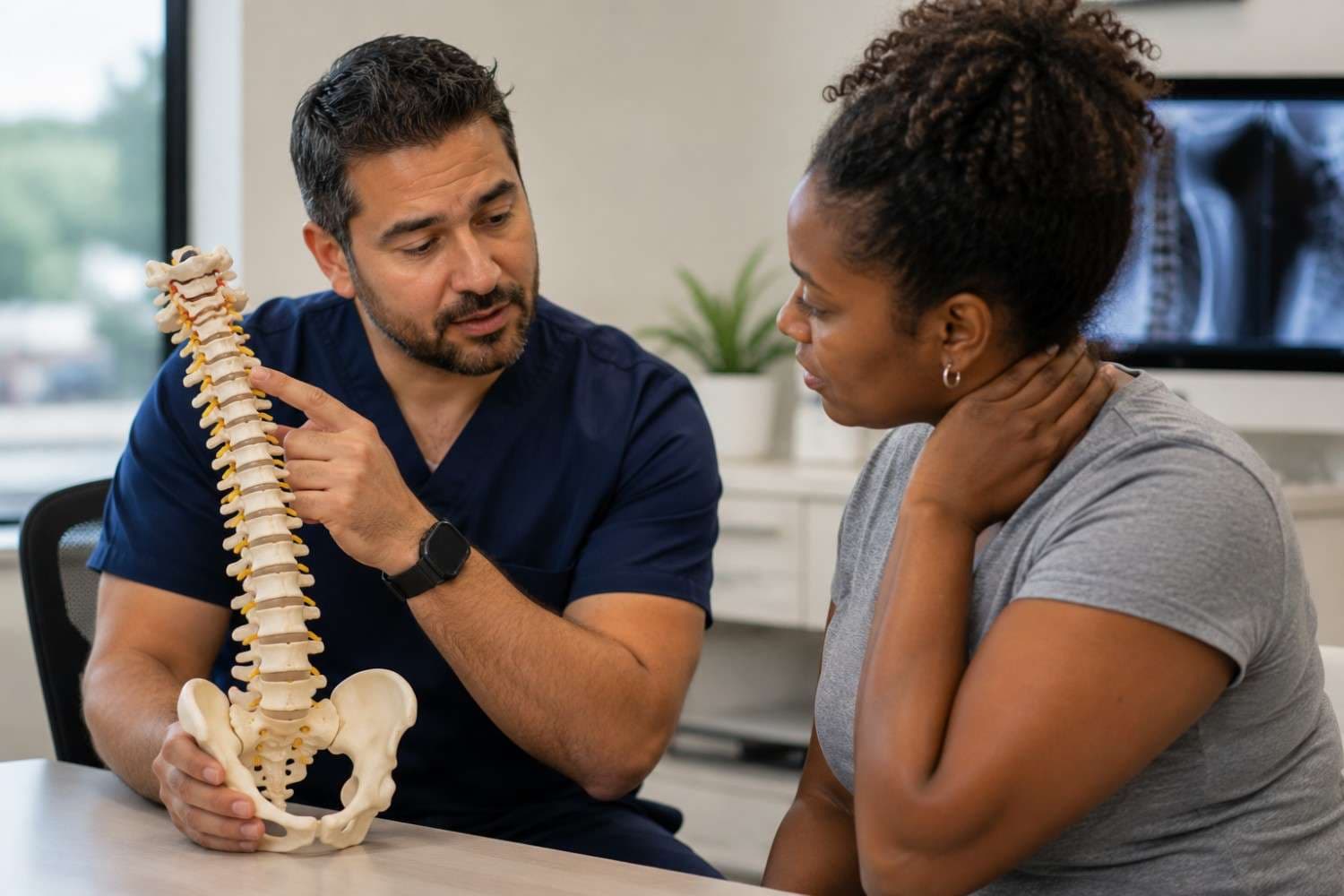
Herniated Disc from a Car Accident: Comprehensive Treatment Options
DS
By Deepak Sharma, DC
Medically reviewed
Owner & Doctor of Chiropractic · 5 min read · Published · Updated · Last reviewed
Introduction
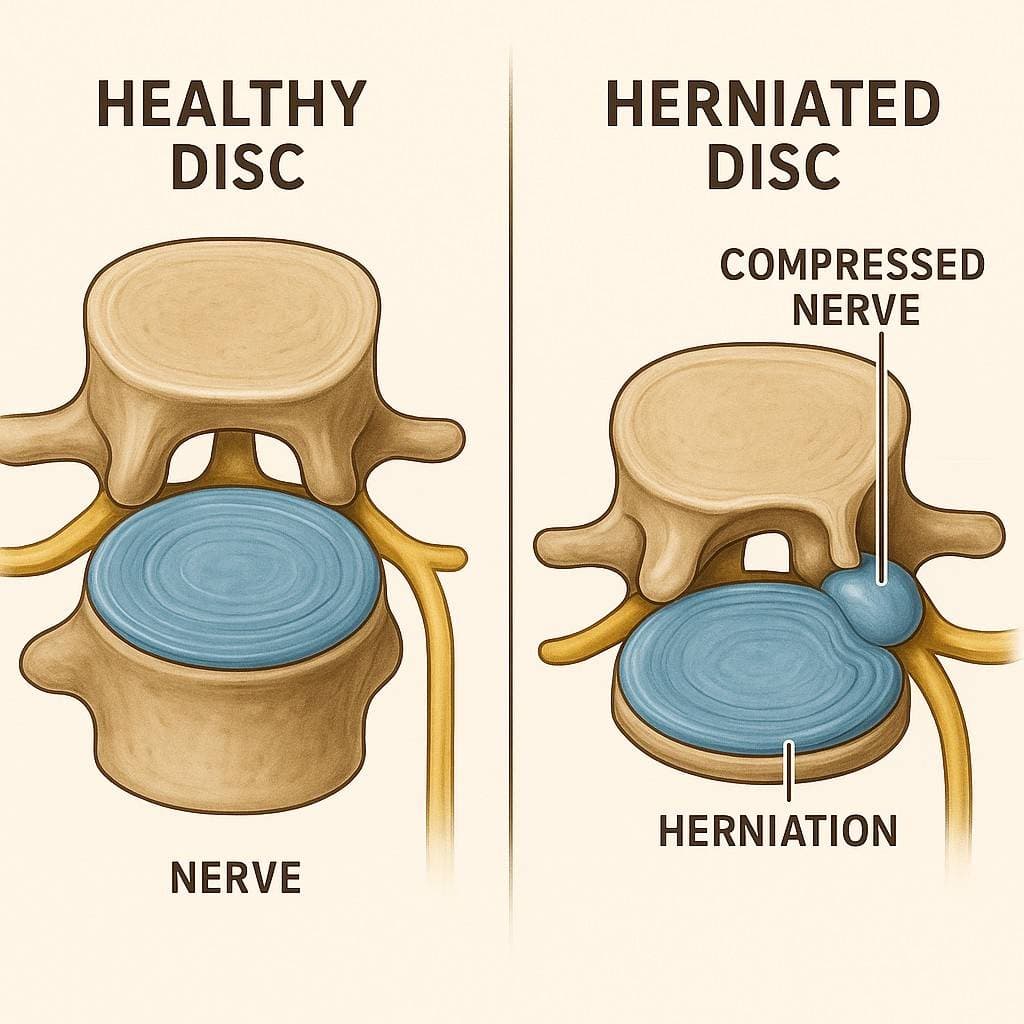
Beaumont’s busy highways—Interstate 10, US-90, and College Street—see thousands of vehicles daily, and rear-end collisions alone account for over 23% of spinal disc injuries in car accidents.1 Many victims adopt a “walk it off” mentality, only to develop severe, radiating pain days later as herniated disc material compresses nerve roots. Prompt, precise diagnosis and a tailored, multidisciplinary treatment plan are essential to prevent chronic disability and restore function. At Car Accident Cares, our certified accident care specialists combine advanced imaging, hands-on therapies, and interventional solutions to address slipped discs after an accident.
How Impact Forces Damage Spinal Discs
Spinal discs act as natural shock absorbers between vertebrae but are vulnerable to high-impact forces during collisions. Understanding the mechanics helps explain why seemingly minor crashes can cause serious disc injuries.
Whiplash Mechanics & Disc Compression
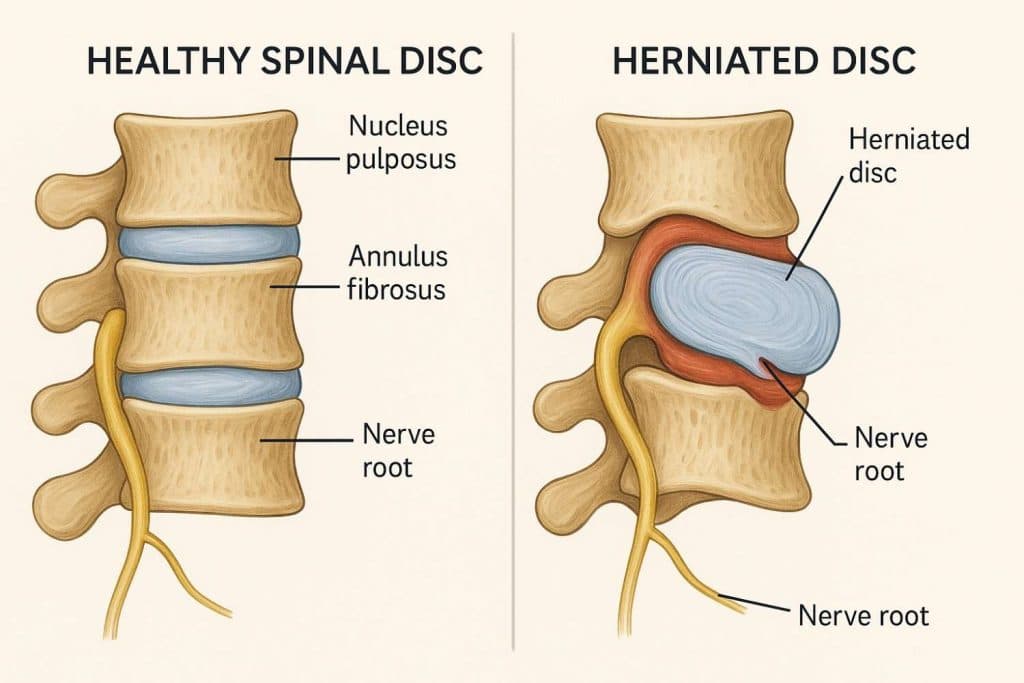
Rear-end collisions produce rapid back-and-forth head and neck motion—known as whiplash—that generates immense G-forces. A 2022 IHIS study reported a 300% increased risk of disc herniation in crashes under 25 mph, highlighting that low-speed impacts can still cause significant spinal injury.2 These forces compress and shear both cervical (neck) and lumbar (lower back) discs, causing tears in the annulus fibrosus (outer ring) and extrusion of the nucleus pulposus (inner gel).
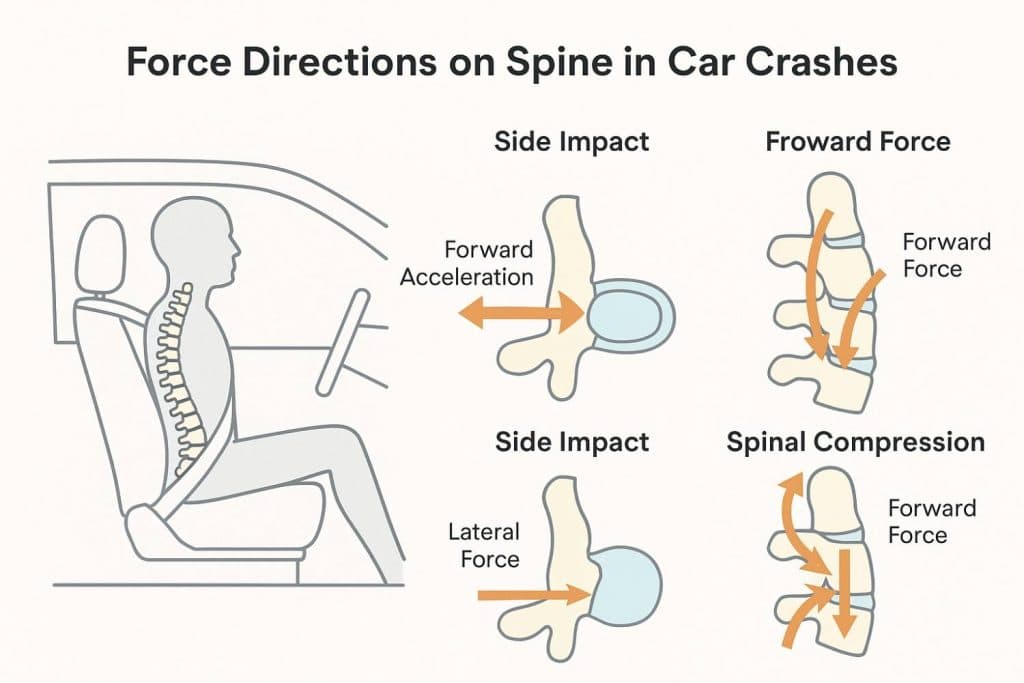
Collision Types & Spinal Stress
- Rear-End Crashes: Sudden acceleration–deceleration compresses discs in the cervical and lumbar spine.
- T-Bone (Side-Impact) Collisions: Lateral shear forces twist the spine, rupturing annular fibers.
- Rollovers: Combine axial loading and twisting, risking multi-level disc damage.
- Seatbelt Paradox: While restraints protect the torso, they can increase lumbar compression during deceleration, contributing to lower back herniations.
Recognizing Delayed-Onset Symptoms
Adrenaline and initial inflammation can mask disc injury for 48–72 hours or longer. Be vigilant for:
- Radiating Pain: Sciatica—pain down the leg past the knee into the calf or foot—or brachialgia—pain into the arm and hand.
- Numbness or Tingling: “Pins and needles” in the extremities signal nerve compression.
- Muscle Weakness: Difficulty lifting the foot (foot drop) or weakened grip.
- Reflex Changes: Diminished or absent deep tendon reflexes.
- Movement Aggravation: Pain worsened by coughing, sneezing, bending, or prolonged sitting.
- Red Flags: Bladder/bowel dysfunction or saddle anesthesia indicate cauda equina syndrome, a medical emergency.
Advanced Diagnostic Protocols
Accurate diagnosis is the cornerstone of effective treatment. Our clinic employs a meticulous approach combining clinical evaluation with advanced imaging.
Beaumont-Specific Imaging Pathways
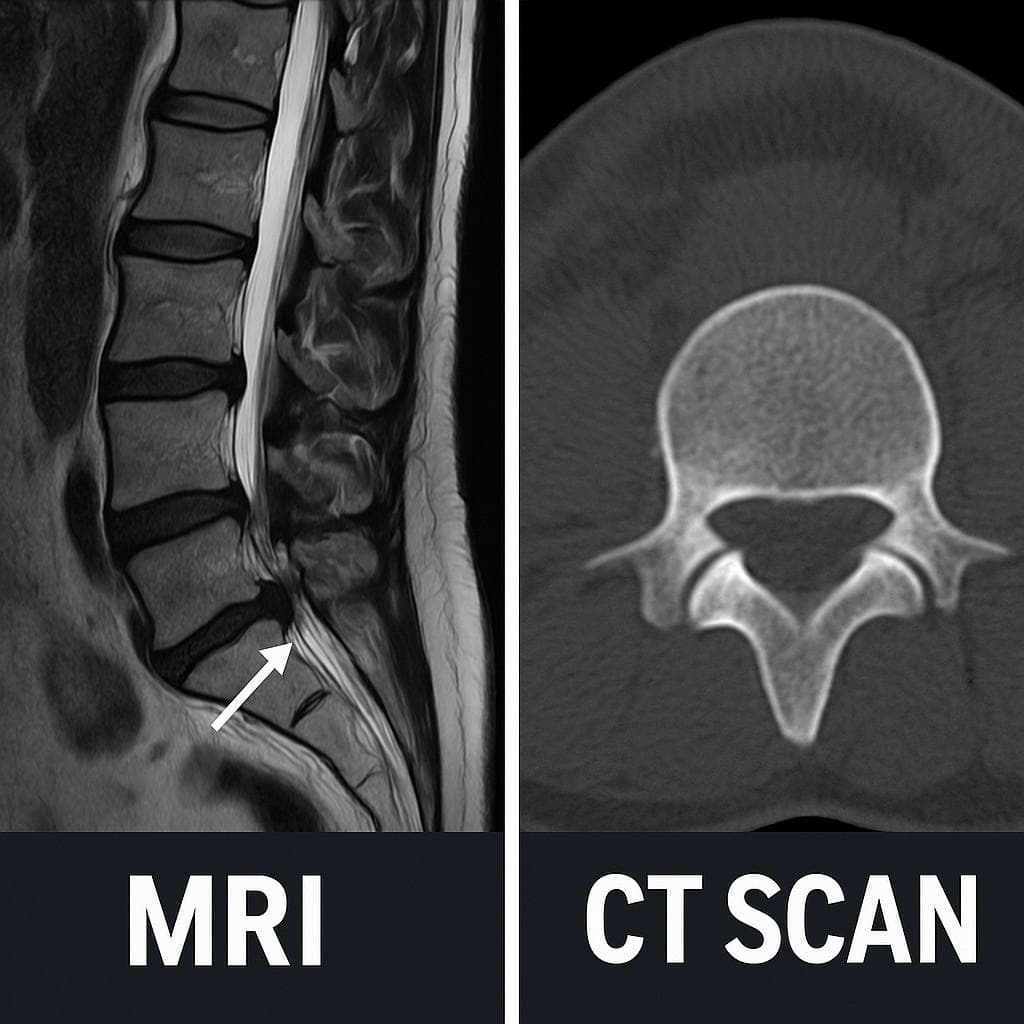
- MRI (Magnetic Resonance Imaging): The gold standard for visualizing soft tissues, MRI reveals disc extrusion, nerve root compression, and associated inflammation. Our precision disc imaging ensures clear, detailed views.
- CT (Computed Tomography): Provides superior bone detail to rule out fractures that may accompany disc injuries.
We tailor imaging—weight-bearing vs. supine positioning—based on symptom patterns, ensuring the most accurate diagnosis.
Clinical Evaluation Techniques
- Neurological Examination: Tests reflexes, dermatomal sensation, and myotomal strength to localize nerve root involvement.
- Slump & Straight Leg Raise Tests: Detect lumbar nerve tension and radiculopathy.
- Functional Assessment: Gait analysis and observation of movements that exacerbate or relieve pain.
- AMA Impairment Ratings: Standardized assessments support personal injury claims.
Multidisciplinary Treatment Framework
Our integrated care model addresses pain, promotes healing, and restores function without immediate surgery.
Phase 1: Acute Inflammation Reduction
- Modified Rest & Controlled Movement: Avoid prolonged bed rest; incorporate gentle spinal mobilizations.
- Spinal Traction: Creates negative disc pressure to retract herniated material.
- Ice Therapy: 15–20 minutes, several times daily for the first 72 hours to reduce inflammation.
- Medical Massage: Relieves paraspinal muscle spasms and improves circulation.
These emergency disc protocols stabilize the spine and control pain.
Chiropractic Rehabilitation
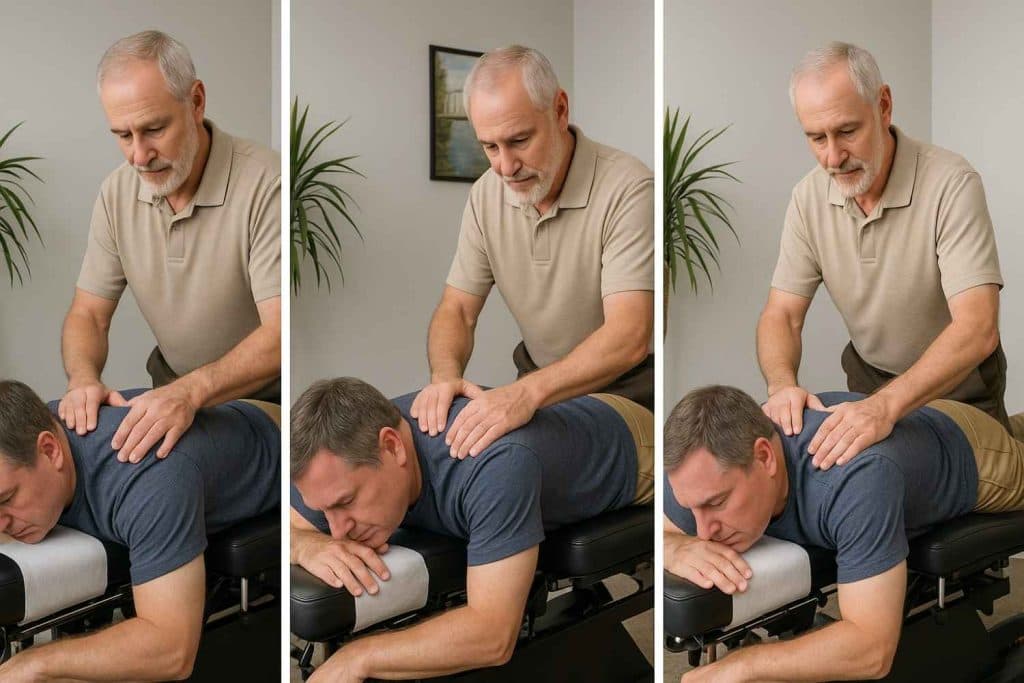
- Flexion-Distraction Technique: A specialized table gently stretches the spine, drawing disc material inward and decompressing nerve roots.
- Graston® Therapy: Instrument-assisted soft tissue mobilization breaks down adhesions in paraspinal muscles.
- Stabilization Exercise Progressions: Core-strengthening and neuromuscular control exercises prevent recurrence.
Learn more about our non-surgical disc correction services.
Interventional Pain Solutions
For persistent pain unresponsive to conservative care, our Pain Management Clinic offers:
- Transforaminal Epidural Steroid Injections (TFESI): Fluoroscopy-guided corticosteroid delivery to the affected nerve root for rapid inflammation reduction.
- Nerve Root Blocks: Diagnostic and therapeutic injections to confirm and treat specific nerve involvement.
- Medial Branch Blocks & Radiofrequency Ablation: Provide longer-lasting relief for facet joint pain often concurrent with disc injuries.
- Intradiscal Electrothermal Therapy (IDET): Heats and seals annular tears, stabilizing the disc.
Surgical Considerations
Surgery—typically a microdiscectomy—is reserved for:
- Progressive neurological deficits (e.g., worsening weakness).
- Failure of 6+ weeks of comprehensive non-surgical care.
Our team coordinates referrals to top orthopedic spine surgeons for seamless continuity of care.
Recovery Timeline & Prevention
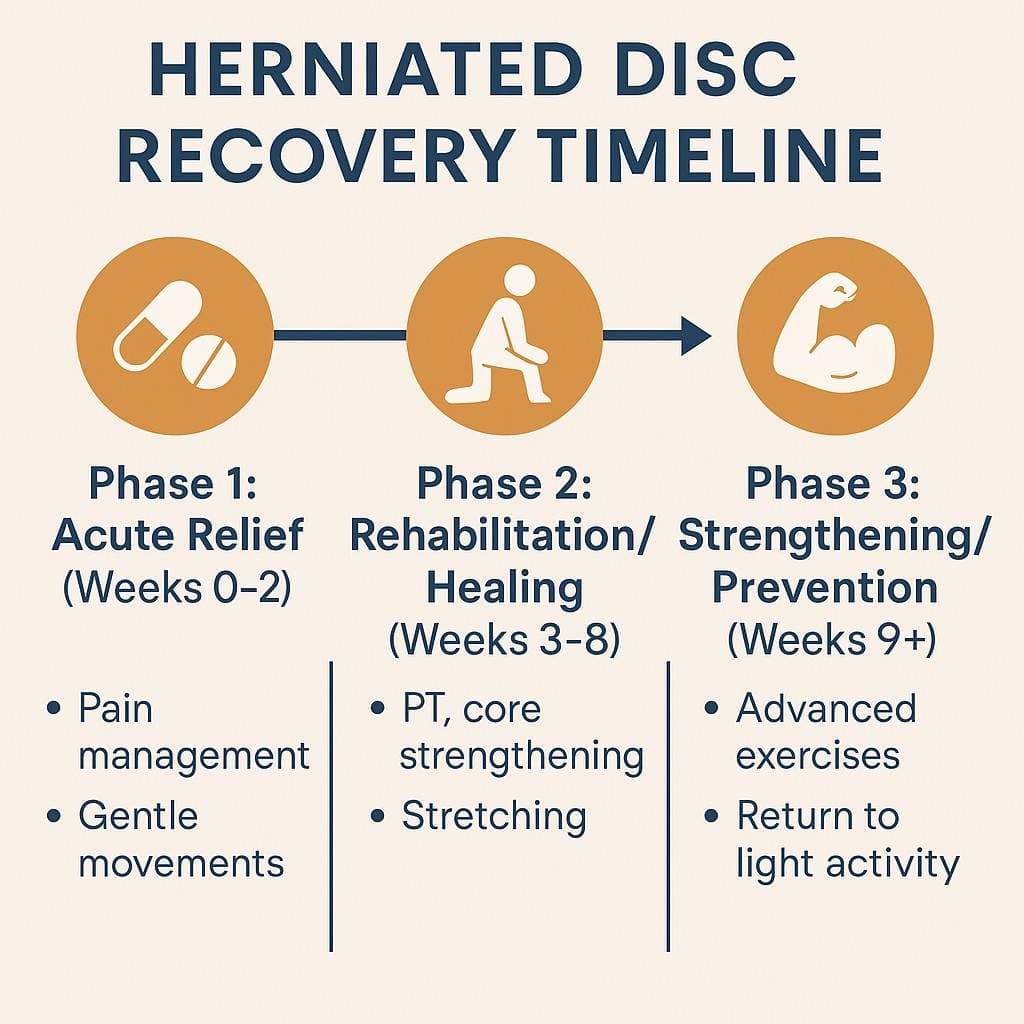
Recovery ranges from 6 to 12 weeks with diligent compliance:
- Phase 1 (Weeks 0–2): Acute relief, modified rest, and pain management.
- Phase 2 (Weeks 3–8): Rehabilitation—flexibility, core stabilization, and graded activity.
- Phase 3 (Weeks 9+): Advanced strengthening, ergonomic modifications, and drive-seat posture training.
Maintaining core-strength programs and using lumbar seat supports during long drives helps prevent recurrence.
Why Choose Beaumont Specialists for Herniated Disc Care
- On-Site Imaging: Rapid access to MRI and CT for same-day evaluation.
- Same-Day MD Access: Immediate medical oversight by accident injury physicians.
- Integrated Team: Collaboration among chiropractors, pain specialists, and radiologists.
- Insurance Advocacy: Expertise navigating personal injury preauthorizations and claims.
- Local Dedication: Conveniently located to serve the Beaumont community with personalized, compassionate care.
Conclusion
A herniated disc from a car accident in Beaumont, TX, need not lead to chronic pain or disability. Early recognition, precise diagnosis, and a comprehensive, multidisciplinary treatment plan—from spinal traction and chiropractic rehabilitation to targeted interventional injections—can restore function and quality of life. Don’t let a slipped disc after an accident define your future. Visit our Back Pain Treatment page to explore your options or call now for an emergency consultation and begin your journey to recovery.
- National Spine Injury Statistics, 2023.
- IHIS, “Disc Herniation Risk in Low-Speed Collisions,” 2022.
- American College of Emergency Physicians, Cauda Equina Syndrome Guidelines.

Medically reviewed by
Verified
DS
Deepak Sharma
DC
Owner & Doctor of Chiropractic
Deepak Sharma, DC is a licensed Doctor of Chiropractic and the owner of Car Accident Cares in Beaumont, TX. He reviews the clinical content published across the site and works with a multidisciplinary network of MDs, chiropractors, imaging centers, and pain-management specialists focused on accurate diagnosis, evidence-based treatment, and complete recovery for motor-vehicle-accident victims across Beaumont and Houston.