
Chiropractic Adjustments vs. Spinal Manipulation: What’s the Difference?
DS
By Deepak Sharma, DC
Medically reviewed
Owner & Doctor of Chiropractic · 4 min read · Published · Updated · Last reviewed

Introduction
When seeking spinal care in Beaumont, TX, you may encounter the terms chiropractic adjustments and spinal manipulation used as though they mean the same thing. Understanding their distinctions empowers you to choose the right approach for your condition. This guide clarifies the relationship between chiropractic adjustments vs spinal manipulation these nuances, outlines common chiropractic techniques, and explains when each method may be most effective for pain relief and functional improvement. By understanding the different types of chiropractic techniques, you can make more informed decisions about your path to recovery and wellness. For comprehensive chiropractic services tailored to your needs, understanding these terms is the first step.

Defining the Terms
01
Chiropractic Adjustments
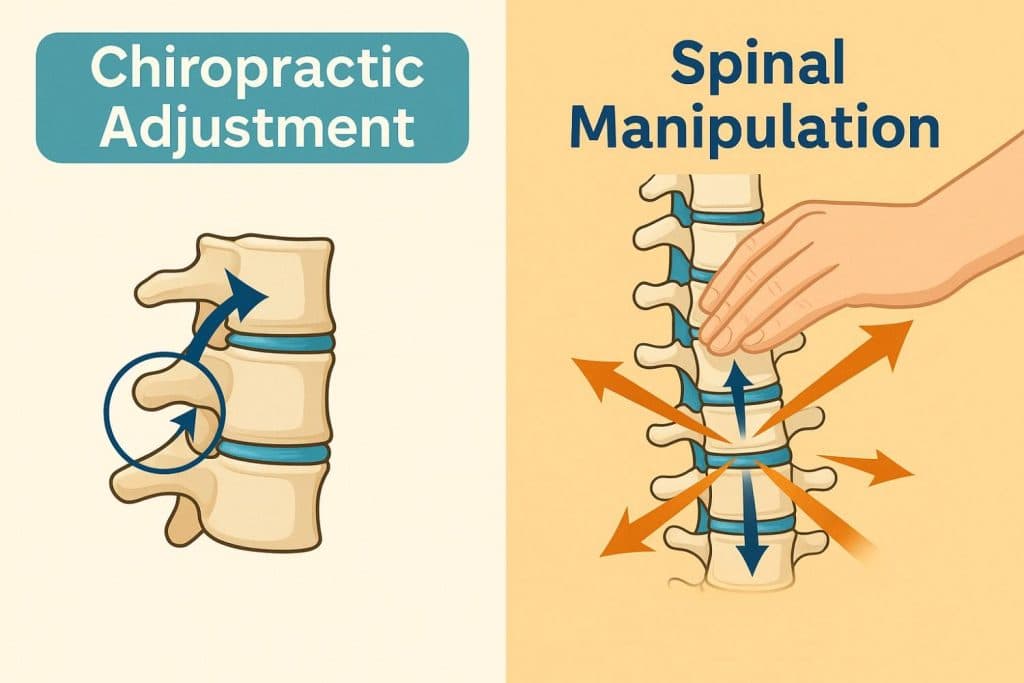
Chiropractic adjustments are highly targeted treatments focusing on individual vertebrae or specific spinal joints identified as dysfunctional through hands-on palpation and functional assessment. Practitioners apply a controlled, high-velocity, low-amplitude (HVLA) thrust to correct what chiropractors call a subluxation—a minor misalignment that can irritate nerve roots and disrupt neural communication. By precisely restoring joint motion, adjustments aim to reduce pain, improve range of motion, and optimize nervous system function.
02
Spinal Manipulation
Spinal manipulation is a broader manual therapy category encompassing any technique that mobilizes or applies force to spinal joints. While chiropractors perform manipulation, so do osteopaths and physical therapists. Manipulation may involve mobilization (slow, rhythmic joint stretching) or HVLA thrusts applied to larger spinal regions rather than a single segment. Its primary goal is to alleviate nerve irritation and joint stiffness across multiple levels, often providing immediate—but sometimes shorter-lived—pain relief.
Key Differences Between Adjustments and Manipulation
Scope and Targeting
- Precision vs. Breadth: Adjustments hone in on a single joint or segment, whereas manipulation can engage multiple joints simultaneously.
- Assessment Requirements: Adjustments require detailed spinal evaluation and palpation to locate subluxations; in contrast, manipulation may be applied based on regional stiffness or pain patterns without pinpointing a single dysfunctional joint.
Technique and Intensity
- Chiropractic Adjustments: Techniques like the Diversified Technique use HVLA thrusts delivered with precise force vectors—patients often hear an audible “pop” as joint cavitation occurs. This method boasts up to 70% greater functional improvement in localized back pain after four sessions compared to non-specific manipulation.
- Spinal Manipulation: May include gentler mobilization or larger-scale HVLA thrusts. While broadly effective for generalized stiffness, research indicates outcomes may not be as lasting without the pinpoint accuracy of adjustments. Manipulation can be ideal for acute episodes when rapid pain reduction is the priority.
Duration of Benefits
Clinical studies demonstrate that adjustment-focused care yields 30–40% longer duration of pain relief compared to generalized manipulation. By resolving the underlying joint dysfunction, targeted adjustments address root causes rather than merely easing symptoms, making them preferable for chronic or recurring conditions.
Common Chiropractic Techniques
- Diversified Technique (HVLA): The most widely used chiropractic method. Precise HVLA thrusts restore alignment and joint function, producing an audible release.
- Gonstead Method: A systematic approach relying on full-spine X-rays and detailed palpation to correct specific vertebrae with unique positioning—especially effective for upper cervical issues.
- Activator Method: Utilizes a spring-loaded handheld instrument delivering gentle, reproducible impulses—ideal for sensitive patients or those with osteoporosis.
- Thompson Drop-Table: Employs a special table with drop pieces that lower slightly during an adjustment, amplifying the thrust while minimizing applied force. Leg-length testing identifies areas needing correction.
Manual Therapy vs. Adjustment
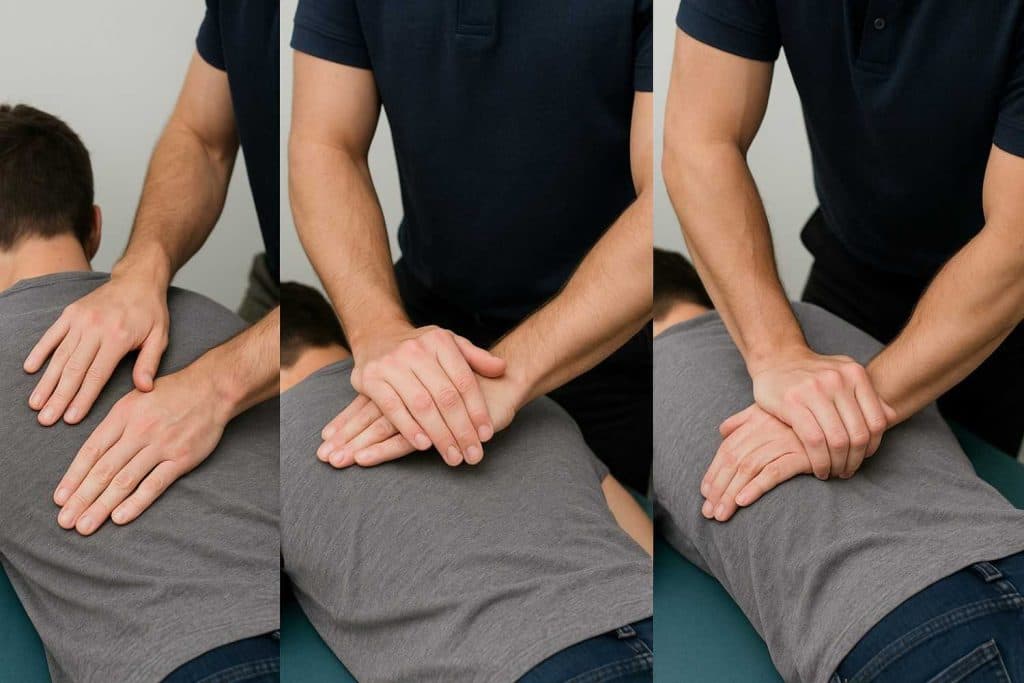
Manual therapy encompasses a wide array of hands-on interventions—joint mobilization, soft-tissue massage, myofascial release, and manipulation. Adjustments represent a specific subset of manual therapy with legally protected application by licensed chiropractors in Texas. Other clinicians may perform mobilization and general manipulation, but only chiropractors deliver subluxation-focused adjustments designed to rectify precise biomechanical dysfunctions.
Safety and Contraindications
When performed by trained professionals, both adjustments and manipulation are extremely safe.
- Serious Complication Rate: Estimated at approximately 1 in 2.5 million manipulations.
- Common Side Effects: Mild soreness or stiffness lasting 24–48 hours, akin to post-exercise muscle fatigue.
- Contraindications: Severe osteoporosis, spinal fractures, advanced disc degeneration, cauda equina syndrome, or known vascular anomalies warrant alternative approaches and thorough medical evaluation.
Choosing the Right Approach
When to Opt for Chiropractic Adjustments
- Chronic or recurring spinal dysfunction localized to specific segments.
- Persistent subluxations identified through palpation or imaging.
- Neurological signs suggesting nerve root irritation (e.g., radicular leg pain).
When Broad Spinal Manipulation May Suffice
- Acute episodes of generalized stiffness or diffuse back pain requiring rapid symptomatic relief.
- Early-stage treatment to reduce pain and muscle spasm before progressing to segment-specific adjustments.
Integrating Treatments for Optimal Care
In many cases, a combined approach offers the best outcomes: initial broad manipulation to control acute pain followed by precision chiropractic adjustments to correct underlying dysfunction. Collaboration with physical therapists—who provide complementary mobilization, therapeutic exercise, and soft-tissue work—ensures comprehensive spinal health management.
Conclusion
Although often conflated, chiropractic adjustments vs spinal manipulation serve distinct roles within manual spinal care. Adjustments deliver targeted, precise force to individual dysfunctional segments, promoting longer-lasting relief and functional restoration. Manipulation offers broader joint mobilization for swift symptomatic improvement. Understanding these differences helps you and your Beaumont chiropractor tailor the most effective treatment plan—whether you seek immediate pain relief or long-term spinal health.

Medically reviewed by
Verified
DS
Deepak Sharma
DC
Owner & Doctor of Chiropractic
Deepak Sharma, DC is a licensed Doctor of Chiropractic and the owner of Car Accident Cares in Beaumont, TX. He reviews the clinical content published across the site and works with a multidisciplinary network of MDs, chiropractors, imaging centers, and pain-management specialists focused on accurate diagnosis, evidence-based treatment, and complete recovery for motor-vehicle-accident victims across Beaumont and Houston.